Bulk fermentation vs final proof
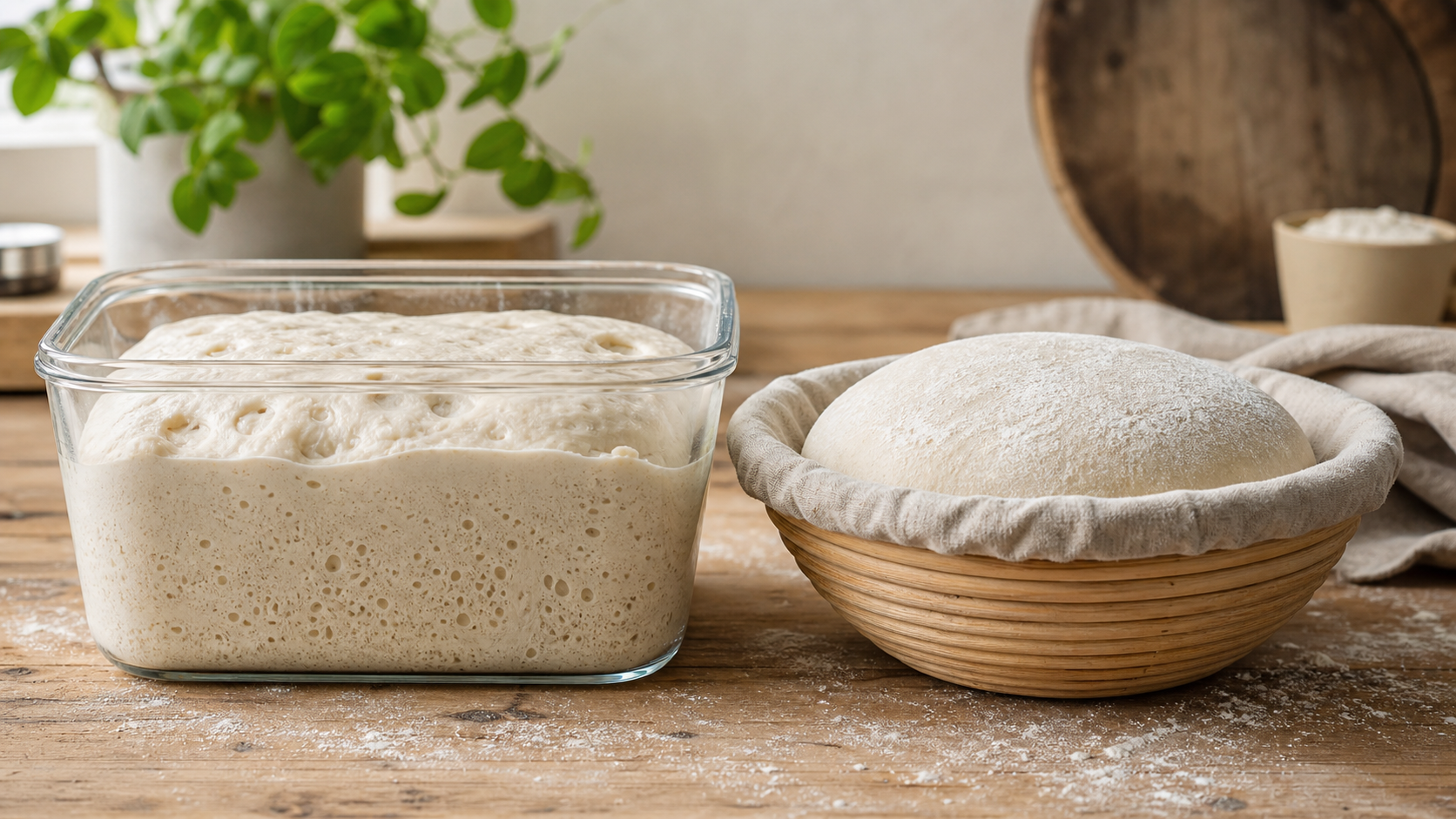
Bulk fermentation and final proof are both fermentation, but they are not the same job. Confusing them is one of the easiest ways to mistime sourdough.
What bulk fermentation does
Bulk fermentation begins after mixing and ends at shaping. During this stage the dough develops gas, strength, acidity, and extensibility. This is where most of the loaf's fermentation foundation is built.
What final proof does
Final proof happens after shaping. The dough relaxes into its final form and gains enough aeration for good oven spring. It is more delicate because the dough already has structure and gas inside it.
Why bulk timing matters most
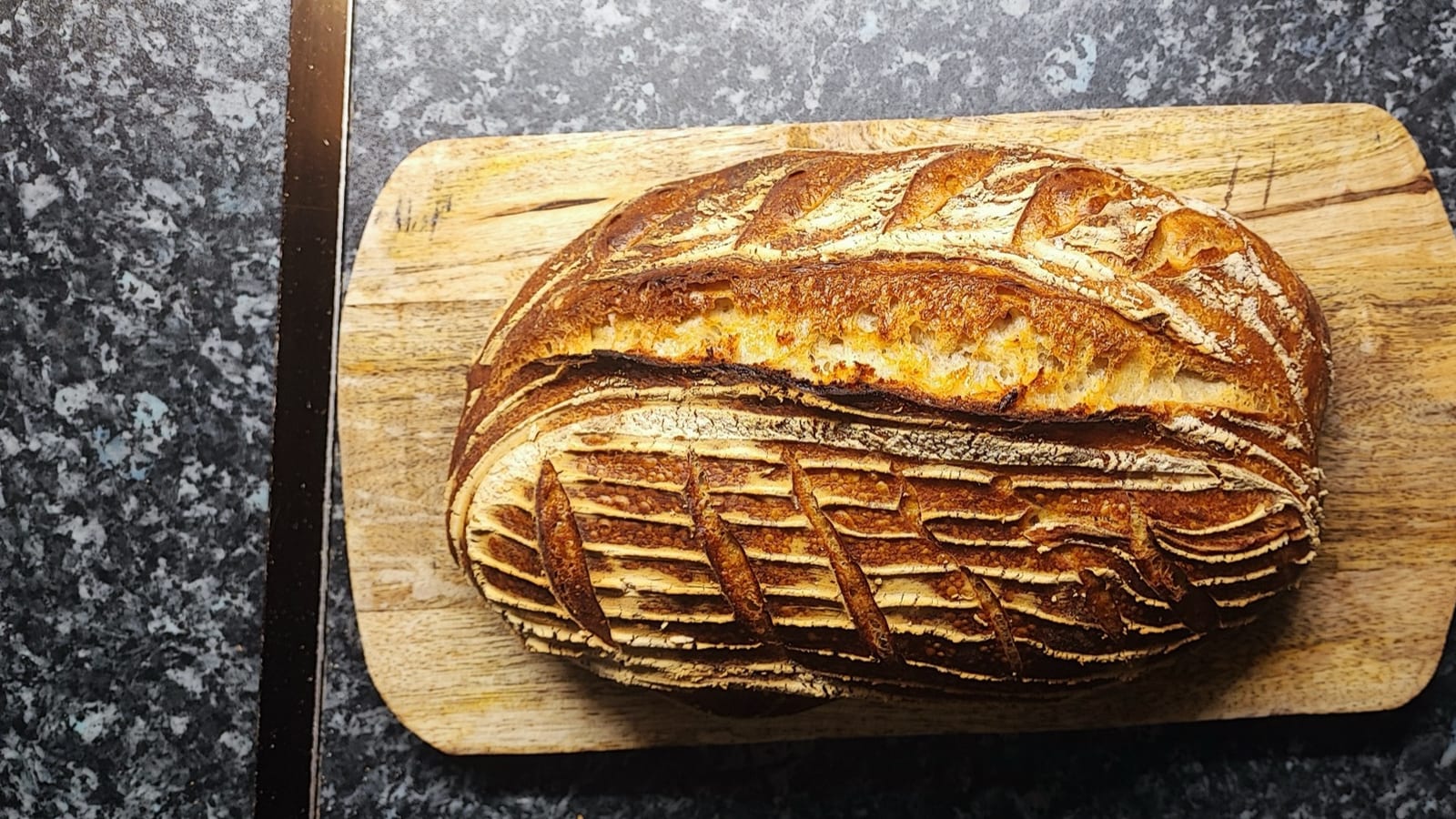
If bulk fermentation is badly underdone or overdone, final proof cannot fully fix it. A good final proof starts with dough that reached the right point before shaping.
The bulk fermentation calculator is designed to help with this first major timing decision.
Cold proofing
A fridge proof slows the shaped dough and builds flavour. It is not a reset button. If the dough entered the fridge under-fermented, it may still bake dense.
The mistake I see most often
The common home-baker mistake is trying to rescue a short bulk with a long final proof. It feels logical: if the dough needed more fermentation, surely it can get it later. Sometimes it helps a little, but it rarely solves the real problem because the dough needed gas and strength before shaping.
Bulk fermentation is when the dough is still one mass. You can fold it, strengthen it, and let gas build evenly. Once it is shaped, you are asking it to hold a form. Push final proof too far and it can lose tension, spread, or bake flat.
How the calculator fits in
Use the bulk fermentation calculator for the first big decision: when to start checking the dough seriously. The calculator cannot feel your dough, but it can stop you treating a cool 18°C dough like a warm 25°C dough.
When the estimate says you are entering the likely window, look for the signs together: visible rise, bubbles at the sides, softer dough, a rounded edge in the container, and a gentle wobble when you move the bowl. One sign on its own is useful. Several signs together are much better.
What final proof should feel like
After shaping, final proof is more about readiness for the oven than building the whole loaf. The shaped dough should relax slightly and become a little lighter, but it should not lose all tension. If it spreads sideways or feels fragile before baking, it may have gone too far.
For many UK home bakers, a fridge proof is practical because it separates the work from the bake. Shape in the evening, chill overnight, bake in the morning. Just remember that the fridge works best when the dough goes in at the right point. It slows fermentation; it does not magically repair bad timing.