Why dough temperature after mixing matters
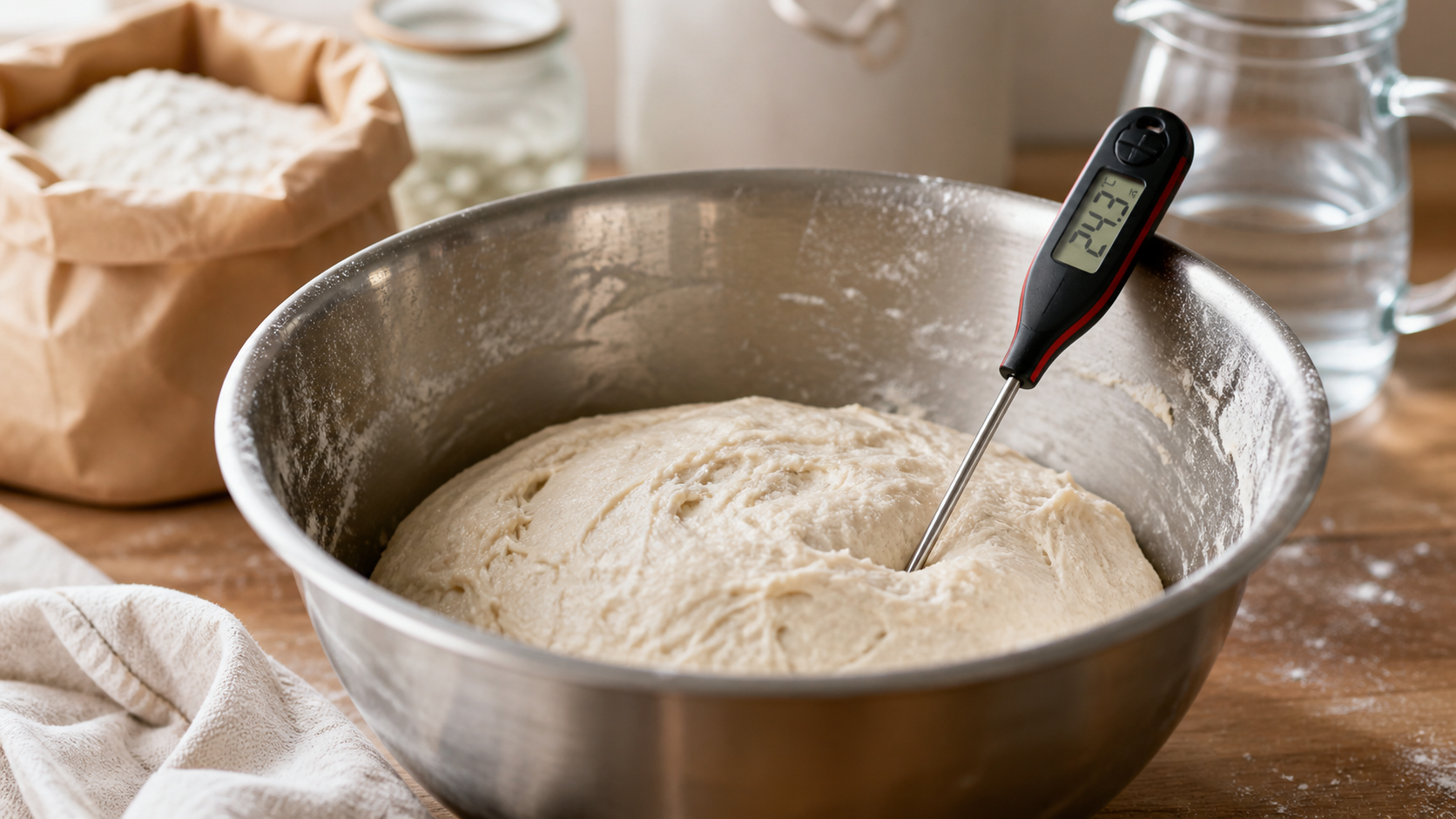
If you only measure one thing beyond flour and water, measure dough temperature after mixing. It is one of the clearest clues to how fast bulk fermentation will move.
Room temperature is not enough
Your kitchen might be 20°C, but the dough could be warmer if you used warm water or cooler if the flour and starter came from a cold cupboard or fridge. The dough temperature is the number fermentation actually responds to.
When to measure
Measure after the ingredients are fully mixed. Insert the thermometer into the centre of the dough and give it a moment to settle. That reading is the best starting point for estimating bulk fermentation.
How to use the number
Enter the reading into the bulk fermentation calculator along with your recipe. It will give you a timing window based on the dough you actually made, not the dough you hoped you made.
Adjusting future bakes
If your dough is always too cool, use slightly warmer water. If it races ahead, use cooler water. Over time, this makes sourdough feel much less random.
Why this matters in a UK kitchen
British kitchens swing around more than recipes admit. Flour stored in a cold cupboard, starter straight from the fridge, a stone worktop, and a chilly room can all pull dough temperature down. On another day, the same recipe made after the oven has been on can start much warmer.
That first dough temperature reading explains why two bakes can behave differently even when the ingredient weights are identical. It is not just a detail for professional bakeries. It is one of the simplest ways to make home sourdough more predictable.
What numbers should worry you?
A dough around 24-26°C will usually move confidently, especially with an active starter. A dough around 18-20°C may still make great bread, but it needs patience. If the dough is very warm, start checking earlier. If it is cool, do not panic when it looks slow for the first few hours.
The bulk fermentation calculator uses dough temperature because fermentation responds to the dough itself. Room temperature still matters, but the dough reading is the better starting signal.
How to use the reading next time
If today's dough landed at 19°C and bulk took far longer than you wanted, make a note. Next time use warmer water or keep the bowl somewhere warmer. If today's dough landed at 27°C and nearly overproofed while you were distracted, use cooler water next bake.
This is not about chasing one perfect number every time. It is about learning your kitchen. After a few bakes, the thermometer stops feeling like extra work and starts feeling like the missing clue.