How dough temperature changes fermentation speed
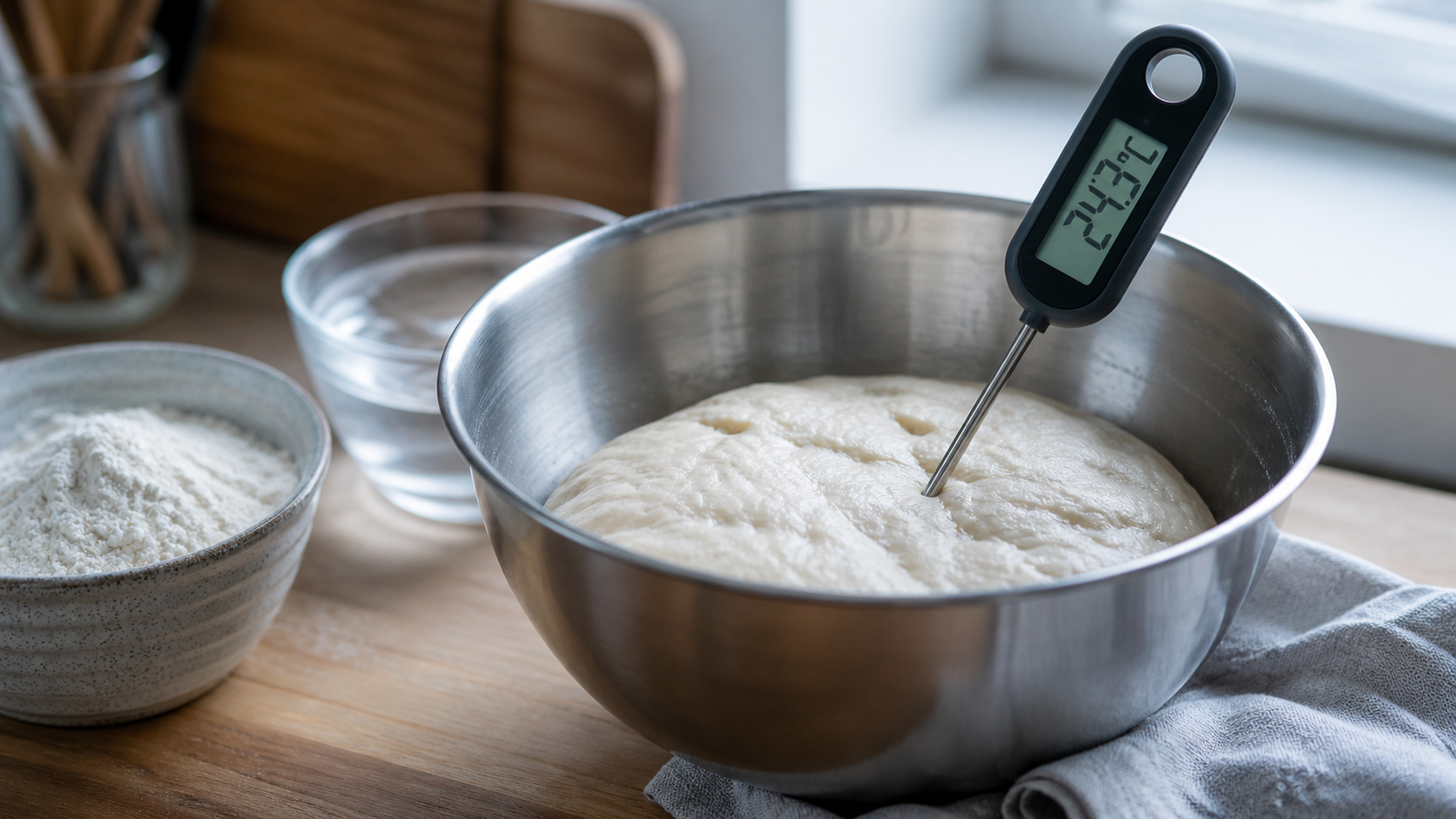
Temperature is one of the biggest reasons the same sourdough recipe behaves differently from one bake to the next. A dough mixed at 18°C is not on the same schedule as a dough mixed at 26°C, even if every ingredient weight is identical.
Wild yeasts and lactic acid bacteria become more active as the dough warms. That extra activity produces gas, acidity, and gluten changes faster. Cooler dough slows everything down, giving you more time but also more uncertainty if you are expecting a summer schedule in a winter kitchen.
Measure the dough, not just the room
Room temperature is helpful context, but dough temperature is more useful. Flour, water, starter, mixing friction, and bowl temperature can all make the dough warmer or cooler than the room around it.
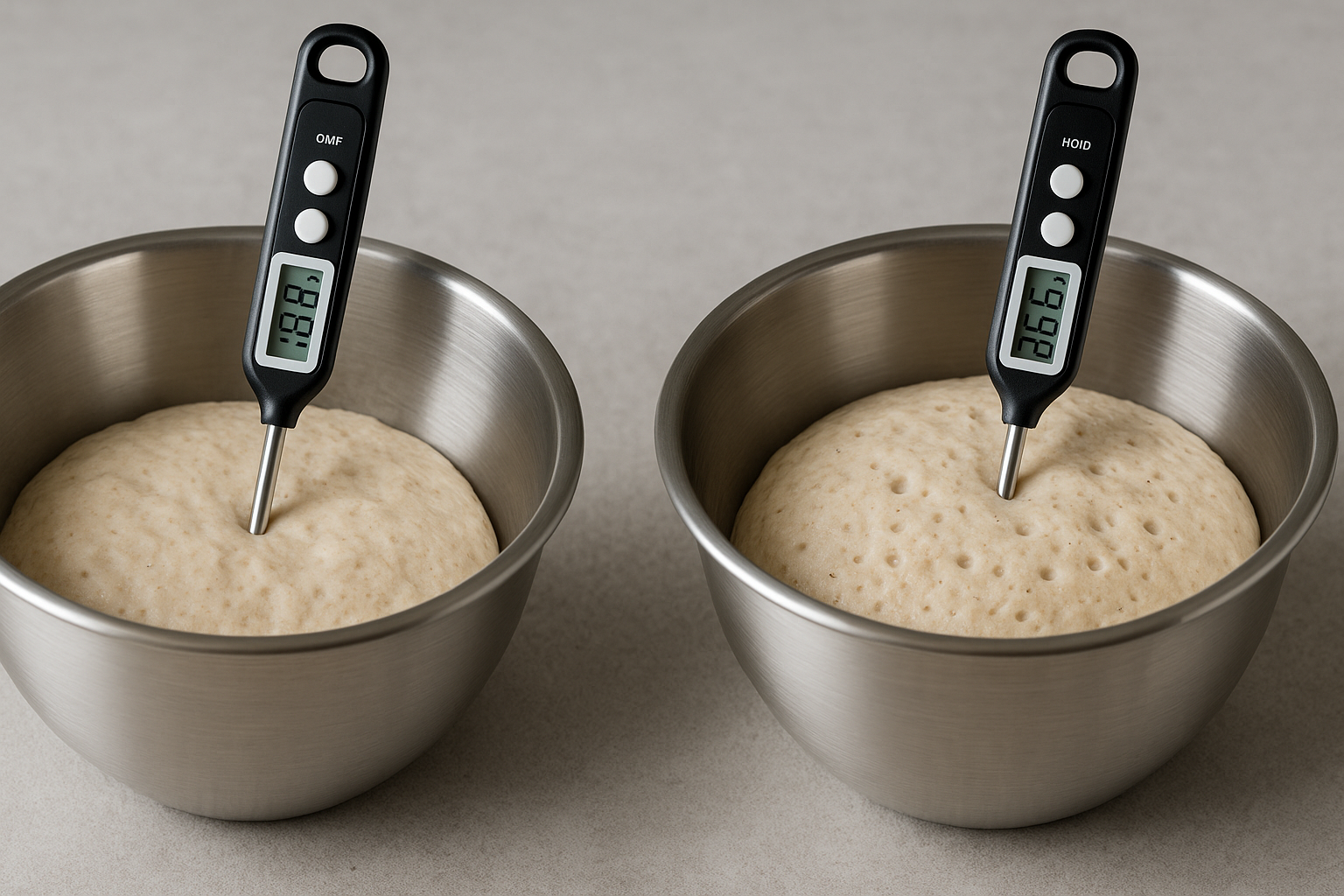
The best reading is usually taken just after mixing, once the dough is fully combined. That number gives you a realistic starting point for bulk fermentation.
Warm dough
Warm dough ferments quickly. It often feels softer, expands faster, and can move from promising to over-fermented with less warning. If your kitchen is warm, consider using cooler water, reducing starter percentage, or checking the dough earlier.
Cool dough
Cool dough ferments slowly. It may feel tighter for longer and take more time to show obvious bubbles. This can be useful for flavour, but it can also tempt you into shaping too early because nothing seems to be happening.
Temperature changes during bulk
Dough does not stay at its starting temperature forever. A warm dough in a cold room gradually cools. A cool dough in a warm kitchen slowly catches up. This is why calculator estimates are best treated as a window, not a command.
Why British bakers talk about weather so much
In a home kitchen, the weather really does get into the bread. A damp, chilly morning and a warm summer afternoon can make the same formula behave like two different recipes. This is why experienced UK bakers often talk about watching the dough rather than obeying the clock.
The point of measuring temperature is not to remove judgement. It is to make judgement easier. If you know the dough started at 19°C, slow early movement makes sense. If it started at 26°C, you know to check sooner and avoid letting it run too far.
Using the calculator well
Enter the dough temperature immediately after mixing, then add room temperature if you know it. Add the actual flour mix, hydration, salt, and starter amount. The bulk fermentation calculator then gives a timing window based on the dough you actually made.
When that window begins, switch from calculator mode to baker mode. Look for rise, bubbles, softness, and movement. The estimate helps you arrive at the right time to judge the dough; it is not meant to replace your eyes and hands.