How much starter should you use in sourdough?
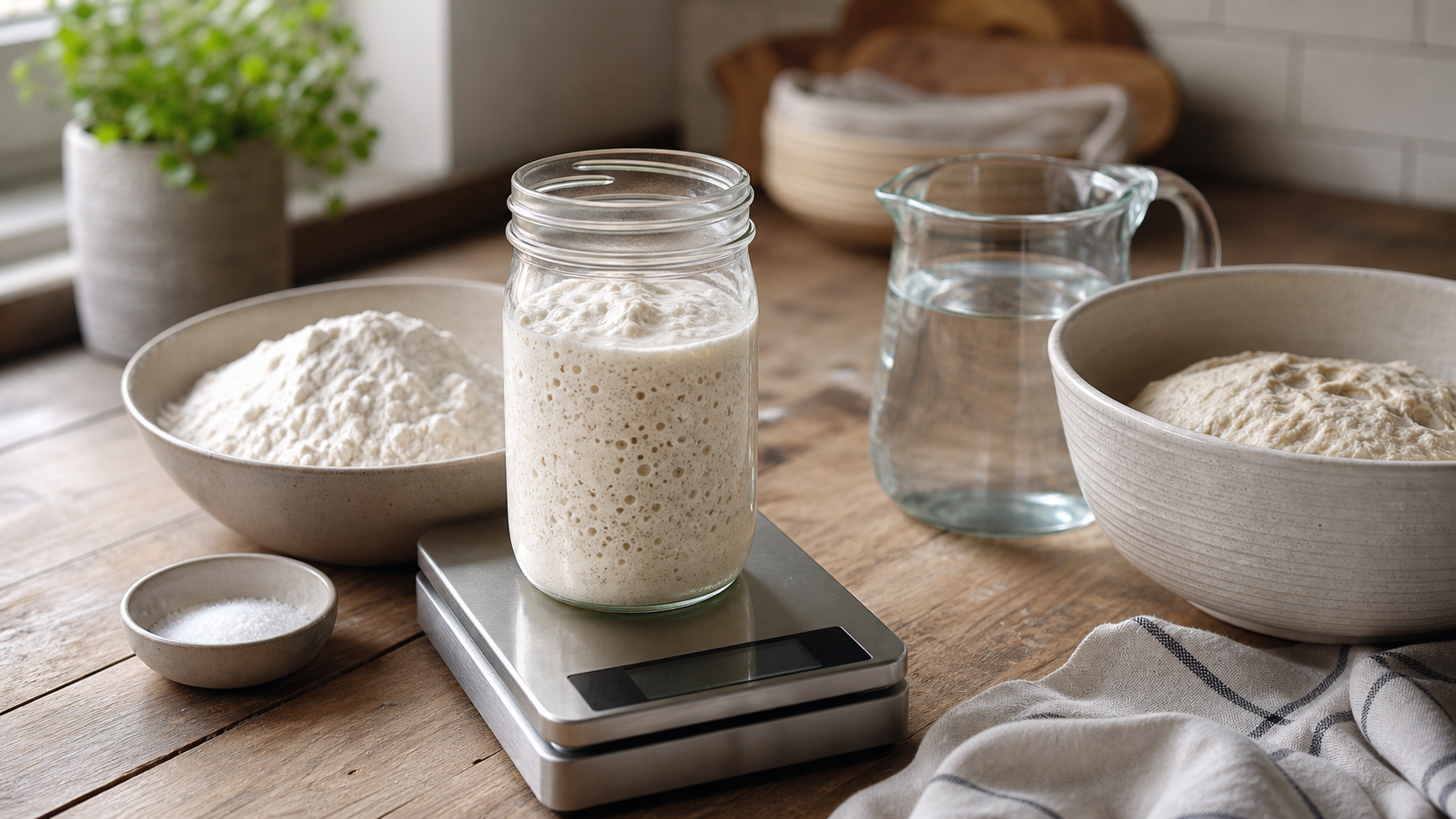
The amount of starter in a sourdough recipe changes more than flavour. It changes fermentation speed, acidity, dough strength, and how forgiving the schedule feels.
Starter amount and inoculation
Inoculation describes how much fermented flour from your starter is present compared with the total flour in the dough. More starter usually means faster bulk fermentation. Less starter usually means slower bulk fermentation.
When to use more starter
More starter can help in a cold kitchen or when you need dough to move faster. The trade-off is that timing becomes tighter and acidity can build sooner.
When to use less starter
Less starter is useful for long fermentation, warm weather, or when you want a slower schedule. It can produce excellent flavour, but the dough needs enough time to develop.
Calculate instead of guessing
The bulk fermentation calculator accounts for starter amount, dough temperature, salt, hydration, and flour type. That is much more useful than copying a fixed time from a recipe.
If your starter feed timing is the problem before mixing, use the starter calculator first.
A useful range for home baking
Many everyday sourdough recipes sit somewhere around 15-25% starter compared with the flour weight. That does not make it a rule, but it is a sensible starting range for a UK kitchen using strong white flour. In winter you might lean higher. In warm weather, or for an overnight room-temperature bulk, you might lean lower.
If you use a very small amount of starter, the dough can taste excellent but needs time. If you use a large amount, the dough may move quickly and become harder to schedule around work, school runs, or sleep. More starter is not automatically better; it just changes the pace.
Starter amount changes flavour too
A smaller starter percentage often gives the dough more time to develop flavour gradually. A larger percentage can bring more acidity into the dough from the start and shorten the bulk window. That can be useful, but it can also make the dough feel like it has gone from "not much happening" to "too far" very quickly.
This is why two loaves with the same hydration can taste and behave differently. Starter percentage is part of the recipe's character, not just a way of making dough rise.
How to test your own recipe
Keep everything the same for two bakes except the starter amount. Try 20% starter one week and 15% the next, taking the dough temperature after mixing both times. Put both versions through the bulk fermentation calculator and compare the timing window with what actually happened.
That gives you a personal reference for your flour, your starter, and your room. A formula from another baker is helpful, but your own notes are better once you have them.