How to feed a sourdough starter for baking
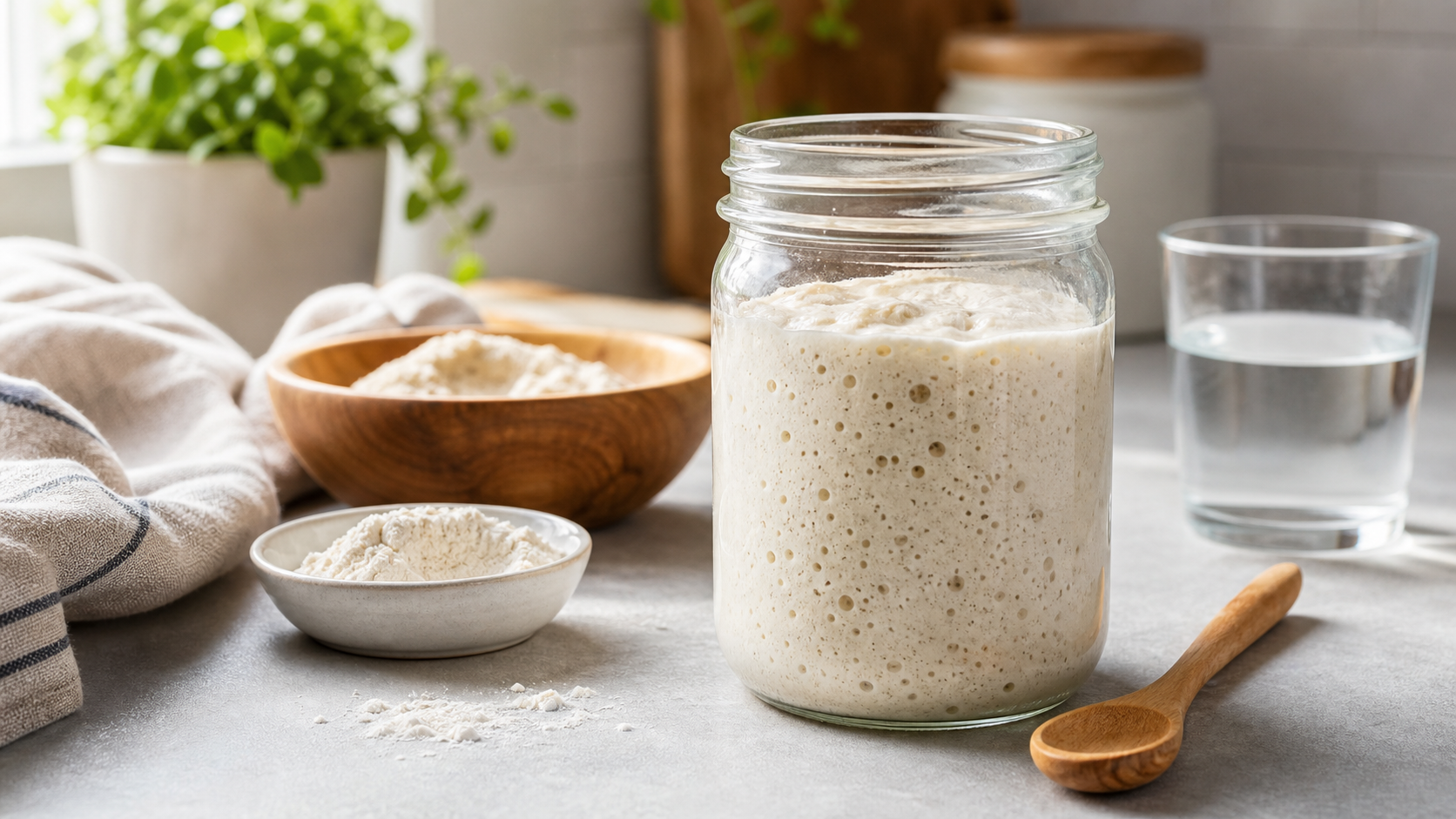
A good bake starts before the dough is mixed. If the starter is tired, cold, underfed, or used too late, the dough will usually tell you later by fermenting slowly or unpredictably.
What feeding ratio means
A feeding ratio compares starter, flour, and water. A 1:2:2 feed means one part starter, two parts flour, and two parts water by weight. For example, 20g starter, 40g flour, and 40g water.
Higher feeds usually take longer to peak because there is more fresh food to work through. Smaller feeds peak faster but can run out of food sooner.
When to use it
For baking, use your starter when it is active, risen, bubbly, and near its peak. It should smell pleasantly fermented rather than harsh or stale. If it has risen and then collapsed, it may still work, but it will often be less powerful and more acidic.
Temperature matters
A starter in a warm kitchen can peak much sooner than the same feed in a cool kitchen. This is why a fixed feeding schedule often works in one season and fails in another.
If your starter is cold from the fridge, give it enough time to warm and become active before expecting it to behave like a room-temperature starter.
A practical routine
If you want to mix dough in the afternoon, feed the starter in the morning and keep it somewhere comfortably warm. If you want to mix in the morning, use a larger feed the night before so it does not peak too early.
Use flour that suits your bake
For a typical UK sourdough, mostly organic white flour is a sensible starter feed. It keeps the starter close to the dough you are going to make. If the jar is sluggish, add a small amount of wholemeal or rye for a few feeds. You do not need much; even a spoonful can make the starter look more lively.
Very different flours can change the starter's smell, texture, and timing. That is not bad, but it is worth noticing. If you normally bake with strong white flour and suddenly feed only rye, the starter may behave differently from the levain you are used to mixing into dough.
How much should you build?
Work backwards from your recipe. If your dough needs 100g starter, do not build exactly 100g and scrape the jar clean. Build enough for the recipe plus a little left to keep. For example, build 130-150g, use what you need, and leave the rest for the next feed.
The starter feed calculator is useful here because it lets you enter the seed starter, flour, and water, then plan when that build is likely to peak. It is much easier than doing mental maths while also trying to fit bread around real life.
What if it peaks too early?
If the starter peaks before you are ready, it is not automatically ruined. If it has only just started to settle, you can often still use it. If it has fully collapsed and smells sharp, feed again or expect a slower, more acidic dough.
Next time, give it a larger feed, use cooler water, or keep it in a cooler spot. Starter feeding is not about one perfect schedule. It is about learning how your jar behaves in your kitchen.