How to scale a sourdough recipe
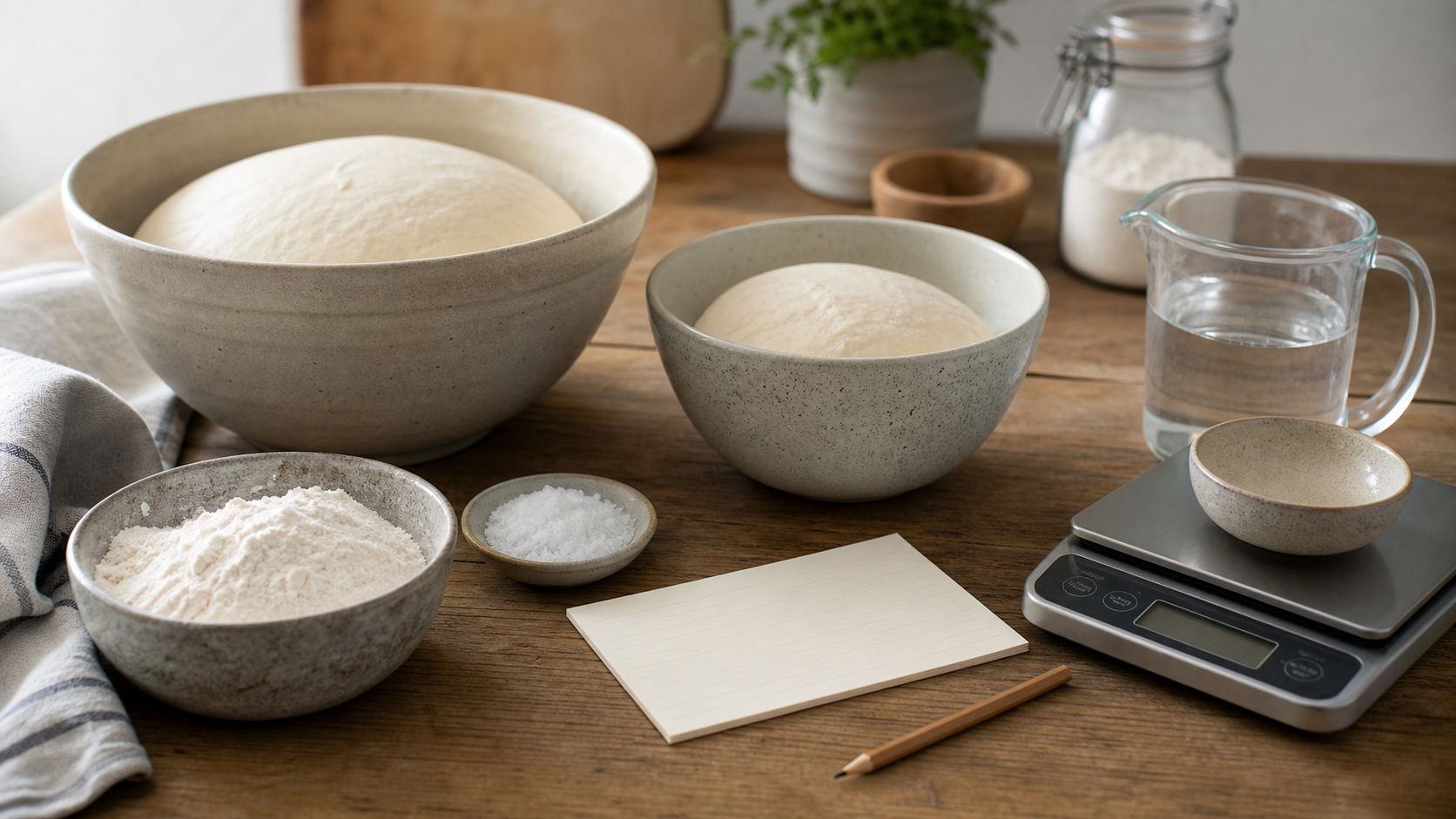
Scaling sourdough is not just making everything bigger or smaller. You want to keep the relationships between flour, water, salt, and starter intact.
Start with flour
Baker's percentages use flour as 100%. Water, salt, and starter are then calculated relative to the flour. This makes it easier to scale from one loaf to two, or from a large loaf to a smaller one.
Keep hydration consistent
If you increase flour but forget to adjust water, the dough changes. Hydration affects handling, fermentation speed, and crumb. Keep the percentage consistent unless you intentionally want a different dough.
Starter affects timing
When you scale a recipe, starter amount still affects fermentation. A larger dough mass can also behave slightly differently. After scaling, use the bulk fermentation calculator to estimate the new timing.

Plan the starter first
If the scaled recipe needs more starter than usual, make sure you build enough. The starter feed calculator can help you plan when that build will be ready.
A simple UK loaf example
Say your usual loaf uses 500g strong white flour, 350g water, 100g starter, and 10g salt. That is a 70% hydration dough with starter at 20% of the flour weight and salt at 2%. If you want two loaves, the clean version is not guesswork: use 1000g flour, 700g water, 200g starter, and 20g salt.
The trouble starts when one ingredient is scaled and another is forgotten. Add the flour for two loaves but leave the water for one, and the dough becomes stiff. Double the starter but not the flour, and the dough ferments faster than expected. This is why baker's percentages are worth learning even if you never want to sound technical about bread.
Scaling changes handling as well as maths
A bigger dough holds heat differently and can feel slower to warm or cool. A smaller dough can lose heat quickly on a cold worktop. If you scale from one loaf to three, the percentages stay tidy, but the dough may still behave a little differently in the bowl.
That is where the bulk fermentation calculator earns its keep. After scaling the recipe, enter the new flour amounts, water, starter, salt, and dough temperature. The estimate should be based on the dough in front of you, not the old loaf size you used last week.
Do not forget flour type
UK flours vary a lot. Strong white flour, very strong Canadian flour, wholemeal flour, spelt, and rye do not absorb water or ferment in exactly the same way. If you scale a recipe and also change the flour, you have changed two variables at once.
For a first scaled bake, keep the flour mix familiar. Once the size behaves, change the flour another time. Sourdough gets easier when you stop making every experiment happen in the same loaf.