Signs your sourdough is overproofed
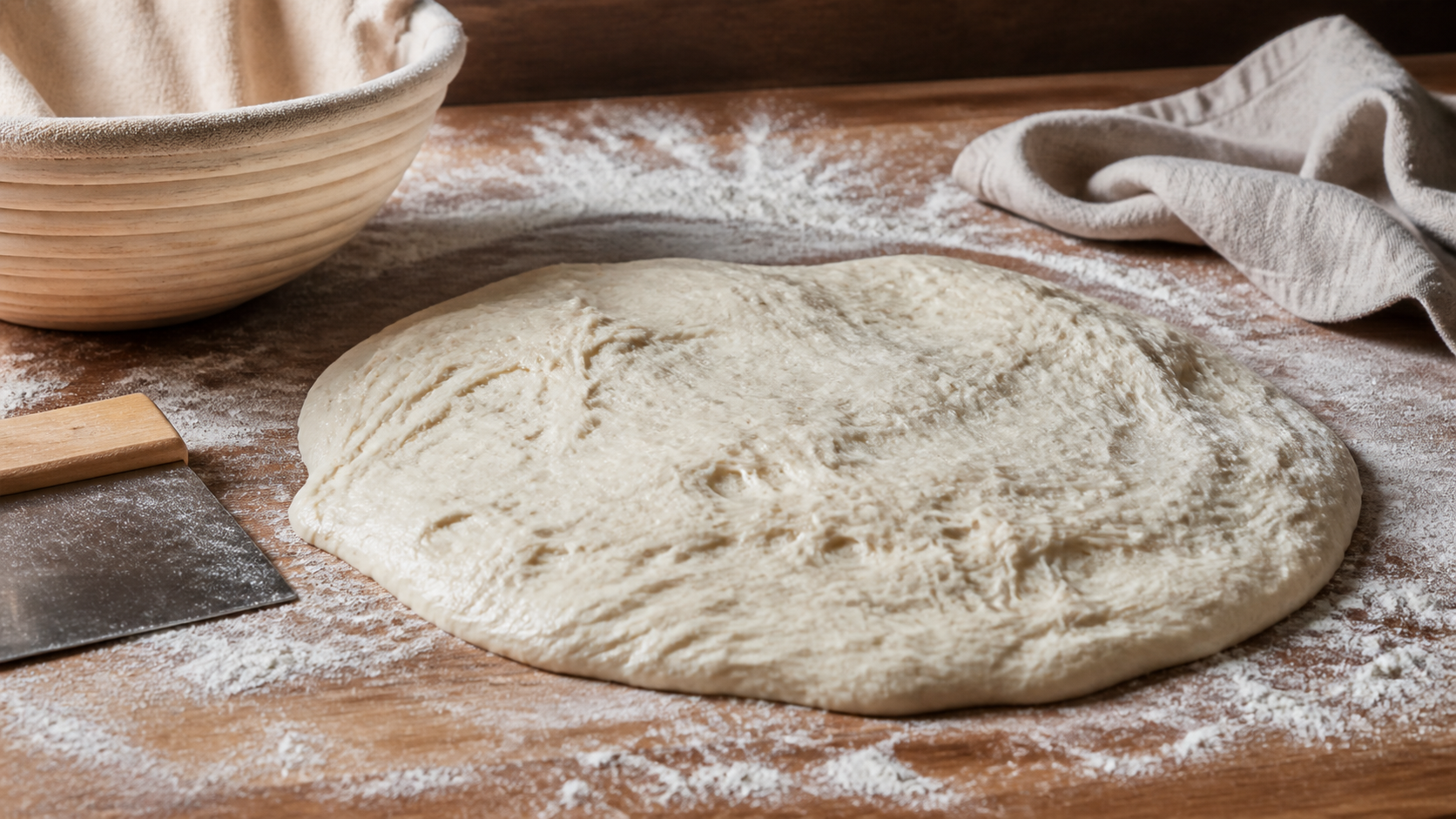
Overproofed sourdough has fermented too far for the structure it has available. The dough may still smell wonderful, but it struggles to hold shape and lift.
What overproofed dough feels like
It often feels slack, sticky, fragile, and loose. When you turn it out, it spreads quickly. During shaping, it may resist tension and tear rather than tighten.
What it looks like after baking
An overproofed loaf can bake flatter than expected. The crumb may be gummy or weak, and the flavour may be sharper because acidity has continued building.
Why it happens
The usual causes are warm dough, too much starter, a very active starter, long bulk fermentation, or a final proof that went too long. Temperature is often the hidden driver.

The bulk fermentation calculator can help you estimate when the dough is likely to peak so you start checking before it goes too far.
Can you save it?
Sometimes. Shape gently, use a tin if the dough cannot hold tension, and bake it anyway. It may not be your prettiest loaf, but it can still be useful bread.
Do not confuse ripe with ruined
There is a useful middle ground between underproofed and overproofed. Ripe dough feels alive, aerated, softer, and a little bouncy. Overproofed dough feels as though the strength has drained out of it. It may look very bubbly, but it no longer wants to hold itself together.
In a warm kitchen this can happen faster than expected, especially with a large amount of active starter. The dough can spend hours looking calm, then suddenly become loose and sticky. That is why the best time to start checking is before you think it is done.
How overproofing shows up during shaping
When dough is overproofed, shaping feels frustrating. Instead of building tension, it spreads back out. The surface tears easily, the dough sticks more than usual, and each movement seems to make it weaker. Adding lots of flour at this stage can make handling easier, but it does not restore the internal structure.
If this happens, switch plans. A tin loaf, focaccia-style bake, or flatter rustic loaf may save the dough better than forcing it into a high free-standing boule.
Prevent it with earlier checks
Use the bulk fermentation calculator when you mix, not after the dough already looks suspicious. Enter dough temperature, flour mix, starter amount, hydration, and salt. When the estimated window approaches, check every 20-30 minutes rather than wandering off for another two hours.
The aim is not to stop fermentation early. The aim is to catch the dough while it still has lift, softness, and strength at the same time.