Sourdough bulk fermentation in winter
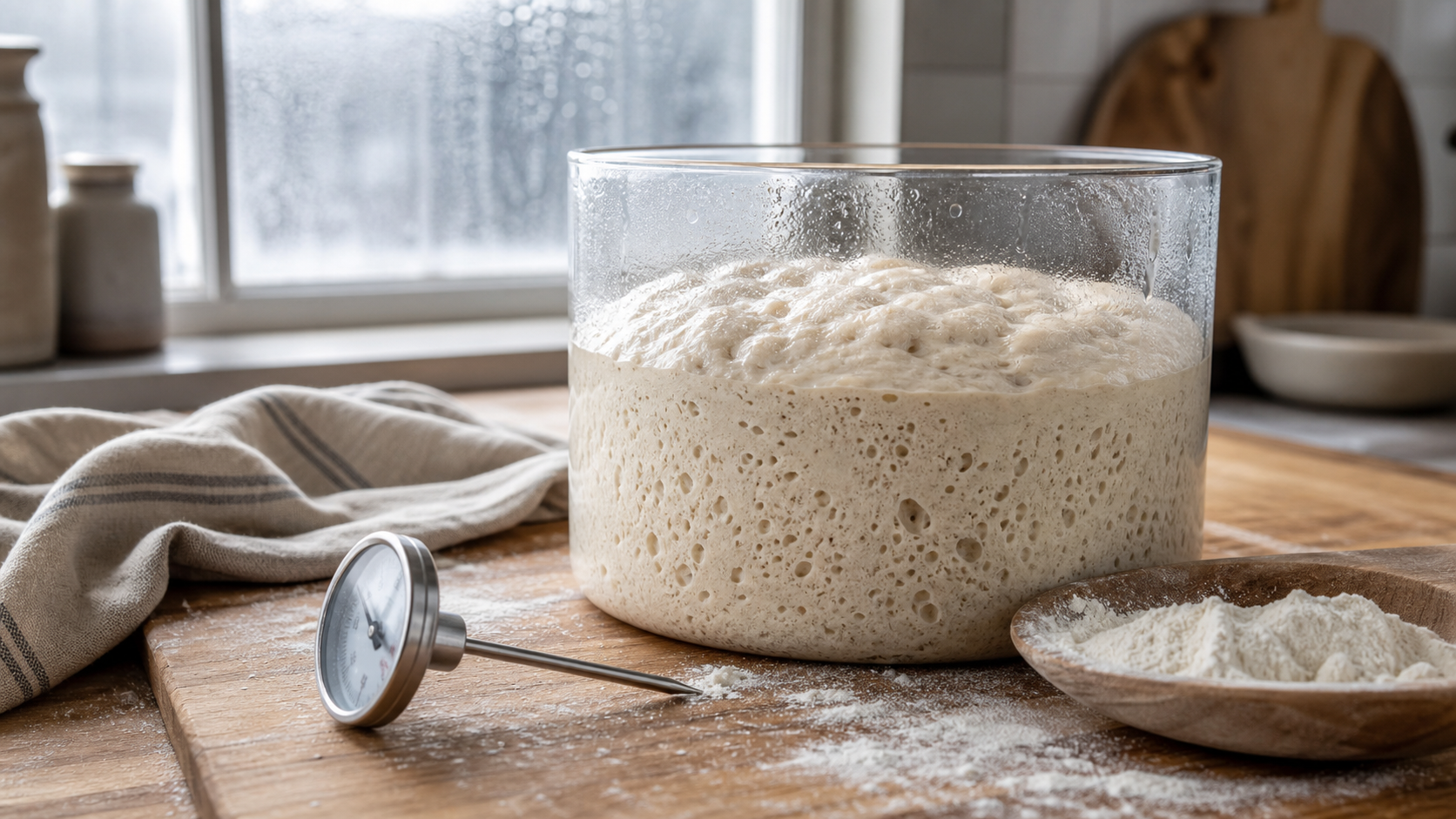
Winter sourdough can feel like a different hobby. The same recipe that behaved beautifully in July suddenly crawls across the day, and the dough may look almost unchanged for hours.
The problem is usually not your starter or your flour. It is temperature. Cooler dough ferments more slowly, and a cold kitchen can stretch bulk fermentation far beyond the times written in a recipe.
Measure the dough first
Room temperature matters, but internal dough temperature matters more. Flour, water, bowl temperature, and starter temperature all influence the dough after mixing. A dough at 18°C is on a very different schedule from a dough at 25°C.
Before guessing, take a reading and put the number into the sourdough bulk fermentation calculator. It gives you a more realistic window for when to start watching the dough closely.
Ways to help winter dough
You can use slightly warmer water, ferment in a warmer spot, increase starter percentage, or simply give the dough more time. The best choice depends on your schedule. If you need the dough ready sooner, adjust temperature or starter amount. If you have all day, time may be enough.
Do not shape too early
Cold dough often looks sleepy before it suddenly becomes active. If you shape too early, the loaf may bake dense and tight. Wait for rise, bubbles, softness, and a gentle jiggle, not just the clock.
Warm the dough, not just the room
Putting dough in a warmer place helps, but the dough still needs time to warm through. A big bowl of dough that starts at 18°C will not instantly become 24°C because it is moved near the boiler cupboard. This is why measuring after mixing is so useful. You know where the dough is starting from.
In winter, warmer mixing water is often the cleanest adjustment. You can also warm the bowl, keep the flour away from a freezing cupboard, or let the starter sit at room temperature before mixing. Small changes at the start are easier than trying to rescue a cold dough later.
Should you use more starter?
Increasing starter can help winter dough move, but it also changes flavour and narrows the timing window. If you normally use 20% starter and the dough is still too slow, try a small increase rather than doubling it. Then enter the new amount into the bulk fermentation calculator so the timing reflects the recipe you actually made.
If your starter itself is sluggish, fix that first. Use the starter feed calculator to plan one or two warm feeds before mixing. A cold dough made with a tired starter is a very slow combination.
What winter bulk should look like
Expect a slower start. The dough may tighten during early folds, then gradually become smoother and more aerated. By the end of bulk, you want visible rise, bubbles at the edges, a softer feel, and some movement when the bowl is nudged.
The best winter bakes usually come from patience rather than force. Give the dough enough warmth to function, then let it tell you when it is ready.