Sourdough hydration explained without the fog
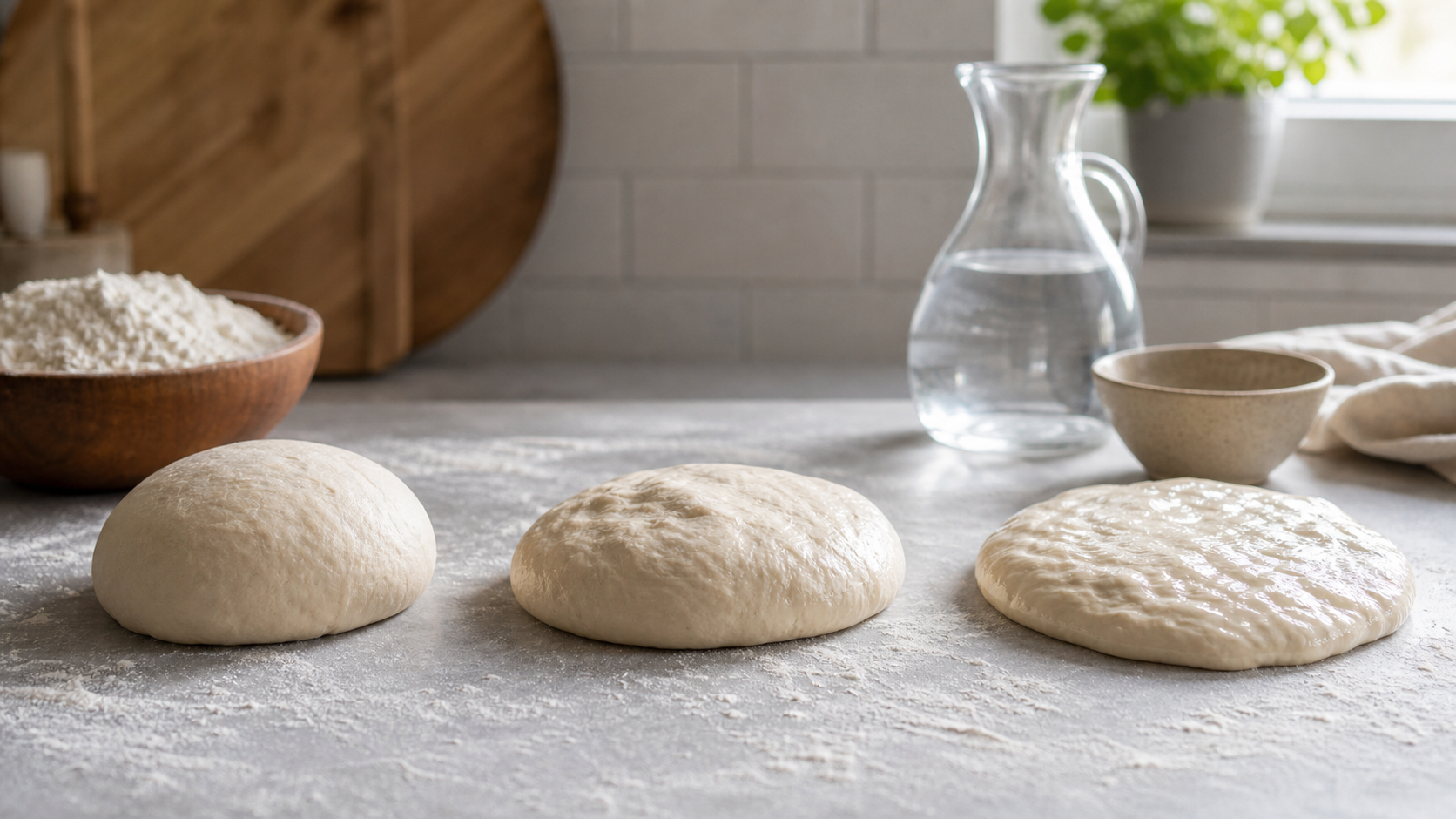
Hydration is the amount of water compared with flour, expressed as a percentage. If a dough has 500g flour and 350g water, the hydration is 70%.
That number sounds technical, but it describes something very practical: how wet the dough feels, how quickly it ferments, how easily it spreads, and what kind of crumb it may produce.
Higher hydration
Wetter dough can ferment a little faster, feel more extensible, and produce a more open crumb when handled well. It can also be sticky, fragile, and harder to shape, especially with weaker flour.
Lower hydration
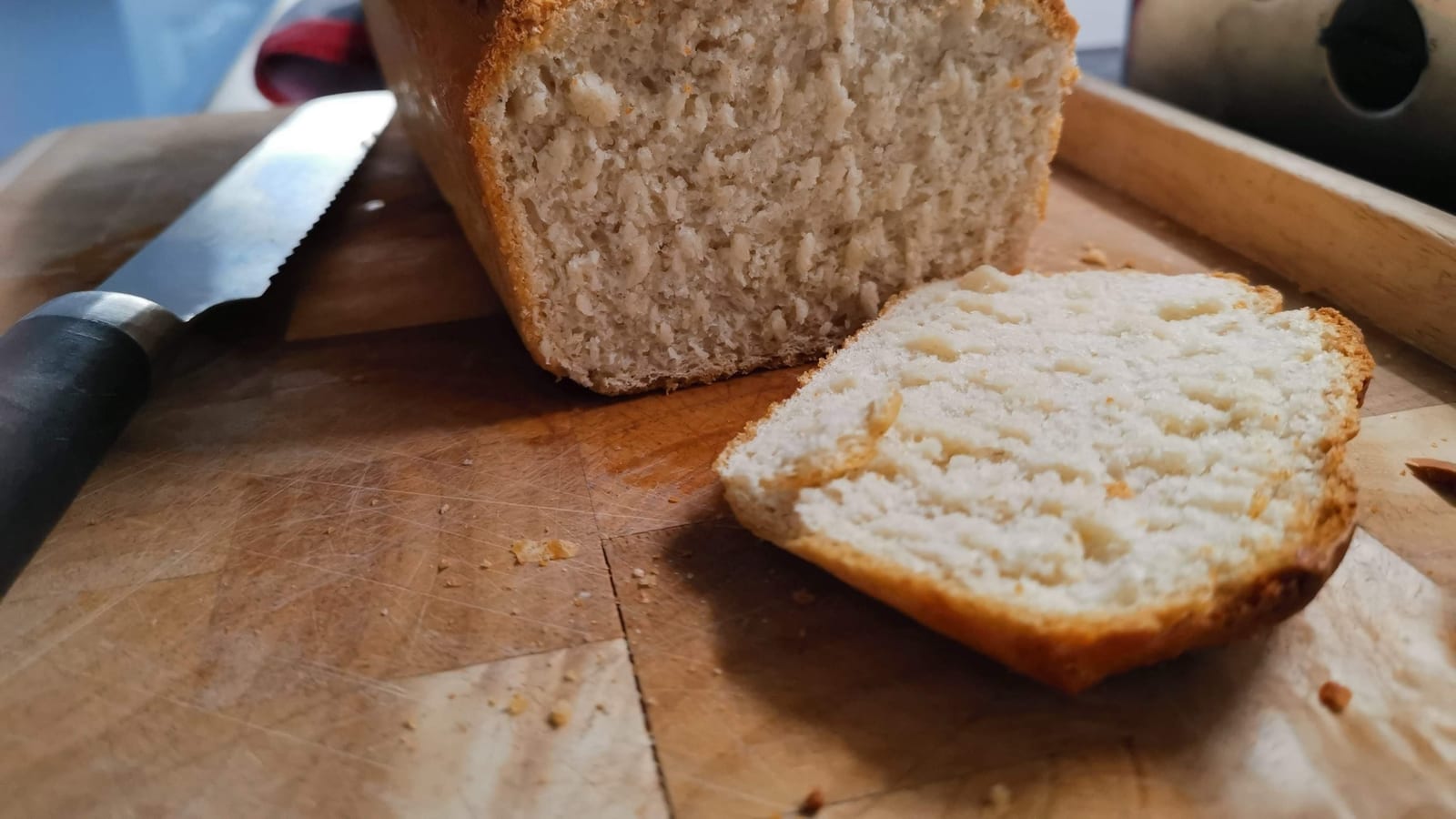
Lower hydration dough is usually easier to handle. It tends to hold shape well and can be more forgiving for beginners. The crumb may be a little tighter, but that is not a failure. Many excellent loaves are moderate hydration loaves.
Flour changes everything
One flour's 75% can feel like another flour's 68%. Strong white flour absorbs more water than many plain flours. Wholemeal flour also absorbs more water because of the bran and germ.
Do not chase a number
It is tempting to think higher hydration means better sourdough. It does not. Better sourdough means dough you can ferment, shape, proof, and bake well. A controlled 68% dough usually beats a chaotic 82% dough.
A good starting point
If you are still building confidence, start around 68-72% hydration with strong white flour. Once shaping feels predictable, increase water gradually and watch how the dough changes.
UK flour makes this personal
Hydration advice online often travels badly because flour is local. A bag of strong white flour from one UK mill may handle 72% beautifully, while another flour feels slack at the same number. Wholemeal flour drinks more water. Rye behaves differently again. Spelt can feel extensible and fragile even when the hydration looks sensible on paper.
This is why "I used 78% hydration" is not enough information. The useful question is: with this flour, this starter, and this temperature, can I handle the dough well enough to build structure?
Hydration affects fermentation timing
Wetter dough often feels more active because water helps fermentation and makes the dough more extensible. Stiffer dough can move more slowly and show its rise differently. The bulk fermentation calculator includes hydration because it changes the way timing behaves.
If you raise hydration, do not also change five other things. Keep the starter amount, salt, flour, and dough temperature familiar. Then you can tell whether the water helped or simply made the dough harder to control.
How to increase hydration without chaos
Add water in small steps. If 70% feels easy, try 72% next time, not 82%. Keep notes on stickiness, fold strength, shaping, oven spring, and crumb. If the dough spreads during shaping, the answer may be less water, stronger flour, better folds, or slightly shorter fermentation.
Good sourdough does not have to be extremely wet. A moderate hydration loaf that ferments well, shapes cleanly, and bakes with a crisp crust is better than a high-hydration loaf that collapses because it was never under control.