Sourdough in a cool Northern kitchen
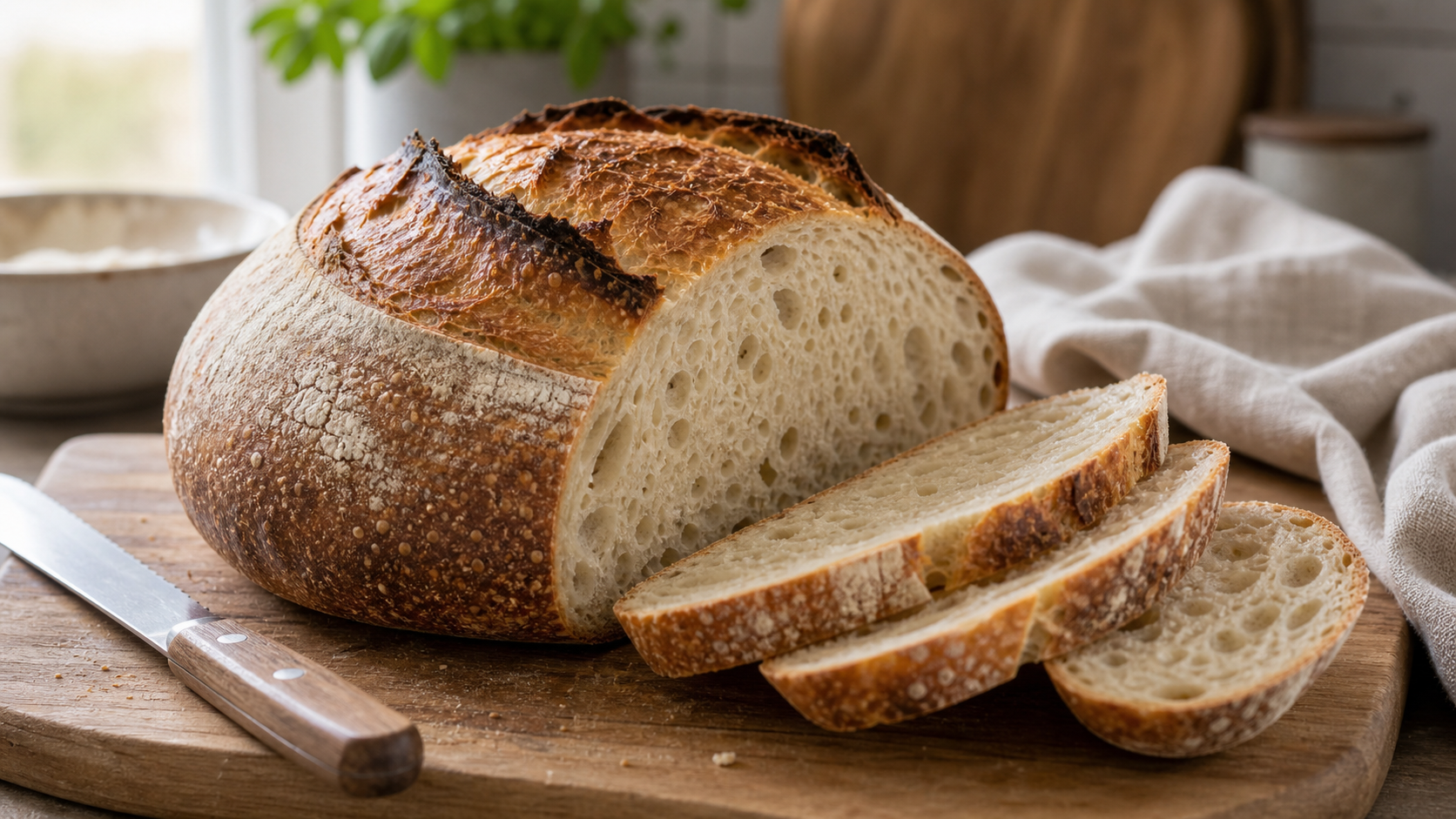
Cool kitchens are one of the big reasons sourdough feels unpredictable in the UK. In a Northern England winter, a kitchen can sit at 16-19°C for most of the day, especially in older houses, stone-floored rooms, or anywhere with a cold window ledge. The recipe may be fine. The starter may be fine. The dough is often just colder than the timetable expected.
This is why I prefer to think in temperatures and windows, not fixed times. A dough that would be lively after four hours at 25°C can still look sleepy after the same time at 18°C. The difference is not subtle, and it affects both starter feeds and bulk fermentation.
Start with the dough temperature
Room temperature is useful background, but the dough temperature after mixing is the number that tells you most. Flour kept in a cold cupboard, starter straight from the fridge, and a cold bowl can all pull the dough down even if the room feels comfortable.
For many loaves, I like the dough to land around 24-26°C after mixing if I want a sensible daytime bulk. If the kitchen is 17°C and the dough starts at 18°C, I know I am in for a slower bake. That is when the bulk fermentation calculator becomes useful, because it lets you plan from the dough you actually made, not the dough a recipe imagined.
Use warmer water before you chase warm places
The easiest adjustment is usually water temperature. You do not need to make the dough hot. You are just nudging the finished dough into a better range. Warm the water, mix, then check the dough with a thermometer. If you overshoot, make a note and use slightly cooler water next time.
Moving the bowl to a warmer place helps too, but it is slower. A big mass of dough does not instantly warm through because it is near a radiator. Keep it away from direct heat and hot surfaces. Gentle warmth is useful; cooking the outside of the dough is not.
Starter feeds need warmth too
A starter jar is smaller than a dough bowl, so it responds quickly to the room. In a cool kitchen, a normal feed can take far longer than expected. If you want to mix dough at lunchtime, do not rely on a summer feeding schedule in January.
Use the starter feed calculator to work backwards from when you want to bake. For a slow starter, a slightly warmer spot and mostly organic white flour can make the rise more predictable. If it looks tired, the 48-hour starter rescue plan is a better answer than throwing random flour at it and hoping.
Where to put dough in a cold house
Every house has its own warm and cold patches. On a typical cool day I would avoid stone worktops, cold windowsills, unheated utility rooms, and draughty corners. Better options are a turned-off oven with the light on, a microwave with a mug of hot water beside the bowl, a warm cupboard, or a spot near but not touching a radiator.
If you use an oven light, check the temperature. Some ovens become warmer than expected. You are aiming for a comfortable fermentation space, not a proving box that races the dough past the shaping window.
Adjust starter amount carefully
Adding more starter can speed up a cold-weather dough, but it also changes the flavour and shortens the window before the dough goes too far. If your normal loaf uses 100g starter for 500g flour, try a small increase first rather than doubling it. Then enter the actual amount into the calculator so the estimate reflects the recipe in your bowl.
If you want a slower, more flexible bake, keep the starter amount moderate and let time do the work. Cool fermentation can give lovely flavour, but only if you wait long enough before shaping.
What to watch for
In a cool kitchen, the first hour or two can look uneventful. The dough may tighten during stretch and folds, then gradually relax and become smoother. Later you should see bubbles at the edge, some rise, a softer surface, and movement when the bowl is nudged.
The danger is shaping too early because the clock says it should be time. If the dough still feels dense and resistant, give it longer. If it has good rise, bubbles, and a gentle wobble, move to shaping and final proof.
A practical Northern kitchen rhythm
On a cool day, I would feed the starter using the starter calculator, mix once it is near peak, measure the dough temperature immediately after mixing, then use the bulk calculator to set expectations. After that, I check the dough rather than staring at the clock.
That rhythm keeps sourdough calmer. The calculators give you the timing window, the thermometer tells you what your kitchen is doing, and the dough still gets the final vote.