Sourdough starter feeding ratios explained
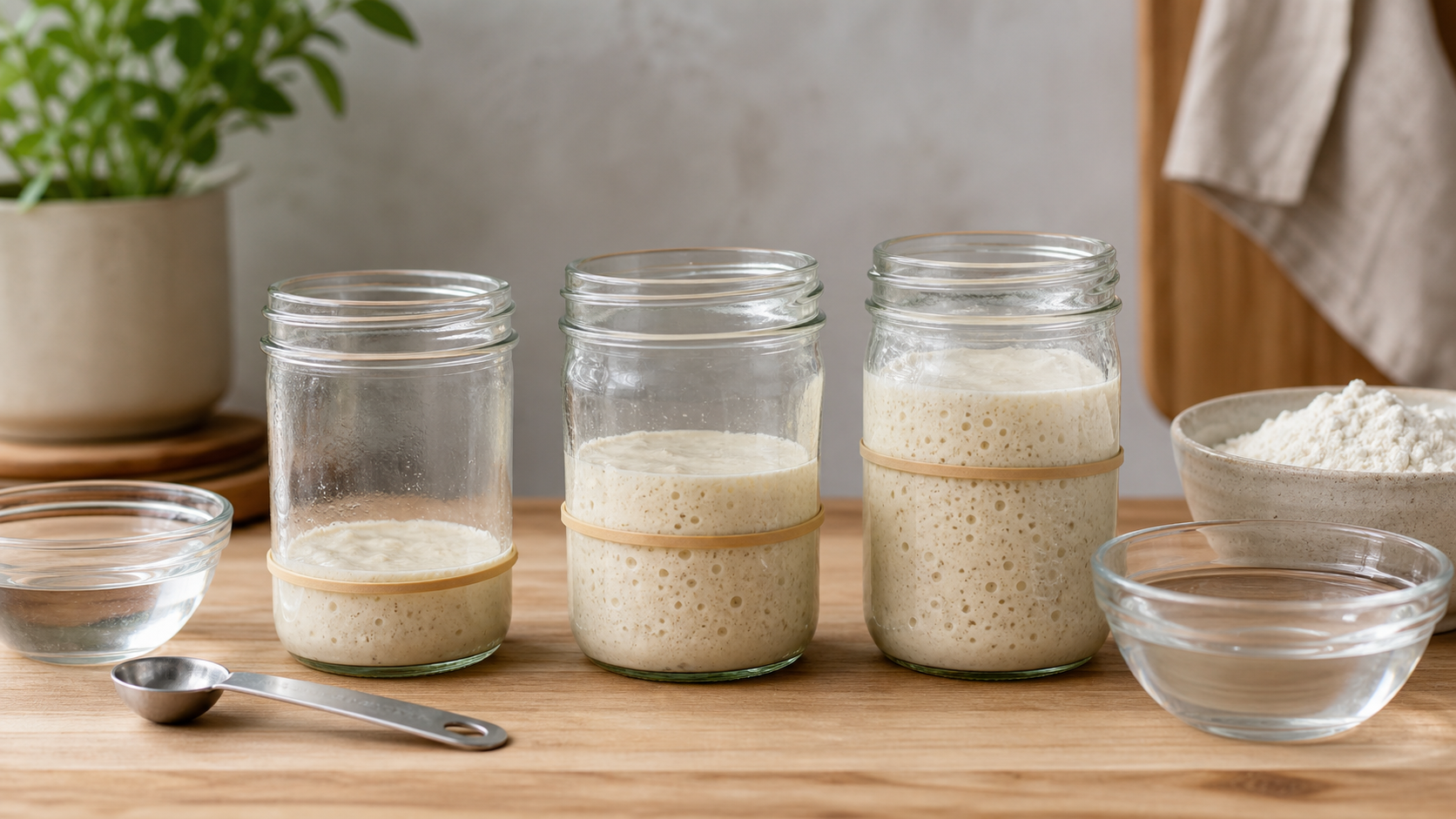
Starter feeding ratios sound more complicated than they are. A 1:2:2 feed simply means one part starter, two parts flour, and two parts water by weight.
The ratio controls how much food the starter has and how long it is likely to take to peak. It also changes acidity, strength, and how flexible your baking schedule feels.
Common feeding ratios
A 1:1:1 feed peaks quickly and is useful when you want activity soon. A 1:2:2 feed is a steady everyday option. A 1:5:5 feed takes longer and can work well overnight or in warm weather.
Temperature changes the answer
The same ratio behaves differently in different kitchens. A 1:3:3 feed in a warm room may peak faster than a 1:1:1 feed in a cold room. This is why starter timing is never only about the ratio.
If you want to plan a feed around your bake, use the sourdough starter feed calculator. It combines feeding amount, flour, water, and temperature into a more useful estimate.
Best ratio for baking
Use whatever ratio gets your starter to peak when you need it. For morning mixing, a larger overnight feed often helps. For afternoon mixing, a smaller morning feed may be better.
How I would choose a ratio
If the starter is lively and the kitchen is warm, I would usually give it more food so it does not peak and collapse too soon. Something like 1:3:3 or 1:5:5 can make sense for an overnight build. If the kitchen is cool or I need the starter sooner, I would use a smaller feed such as 1:1:1 or 1:2:2.
If the starter is weak, I would not bury it under a huge feed straight away. A tired spoonful of starter can struggle with too much fresh flour and water. Start with a modest feed, keep it warm, let it show activity, then increase the ratio once it has woken up.
Organic white, wholemeal, and rye
For everyday baking, mostly organic white flour keeps the starter close to the dough you are likely to mix. A little wholemeal or rye can make a sluggish starter more active because those flours bring more minerals and fermentation-friendly nutrients. You do not need to turn the whole jar into rye unless you want that flavour and behaviour.
UK flour can vary by mill and protein level, so the same ratio may not look identical in every kitchen. If your starter is very loose, reduce water slightly or use a stronger flour. If it is stiff and slow, check temperature before blaming the ratio.
Use the calculator as a planning tool
The starter feed calculator lets you test the practical question: if I feed this amount now, when is it likely to be ready? That is more useful than memorising ratios. Enter the actual grams you plan to keep, the flour and water you plan to add, and the room temperature. Then compare the estimate with what the jar actually does.
After a few feeds, you will know your own starter better than any chart. The ratio gives structure, the calculator gives timing, and the jar gives the truth.