When is bulk fermentation actually done?
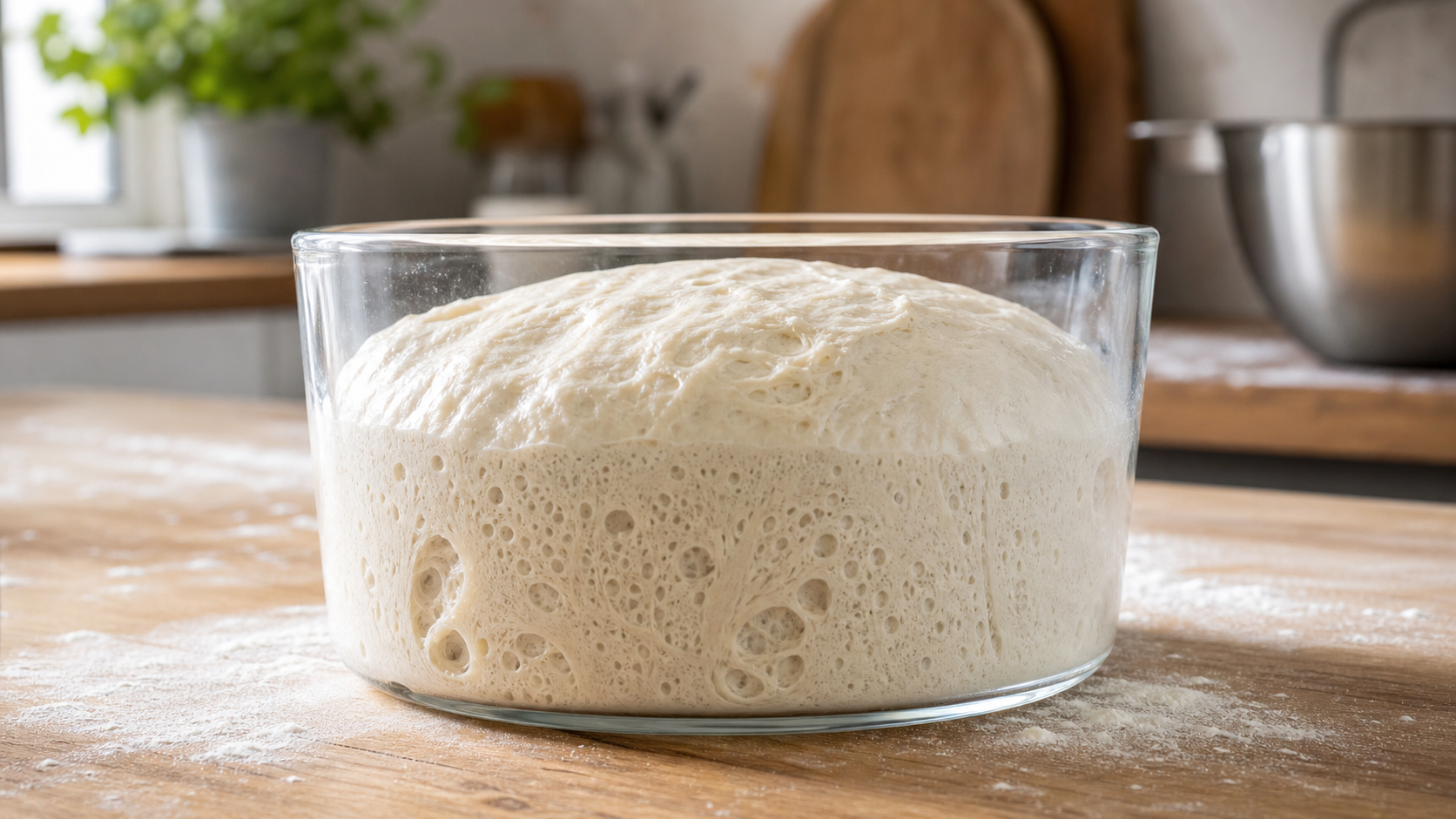
Bulk fermentation is finished when the dough has built enough gas, strength, and elasticity to be shaped without collapsing. The awkward truth is that there is no single perfect clock time. The dough decides.
A calculator can give you a useful target window, but the final decision should come from the dough in front of you. Temperature, starter strength, flour, hydration, salt, and handling all change the pace.
Look for a combination of signs
Good bulk fermentation usually shows several signs at once. The dough has risen noticeably, often somewhere around 40-75% depending on the recipe and room temperature. It looks aerated around the edges, with small bubbles under the surface or along the side of the container.
The dough should also feel alive. When you move the bowl, it should jiggle gently rather than sit like a dense paste. When you handle it, it should feel lighter and more elastic than it did after mixing.
Volume is useful, but not absolute
Volume rise is one of the easiest signals to track, but it is not universal. Warmer dough can be ready with a smaller rise because fermentation continues quickly during shaping and final proof. Cooler dough may need a larger rise because it will keep moving more slowly.
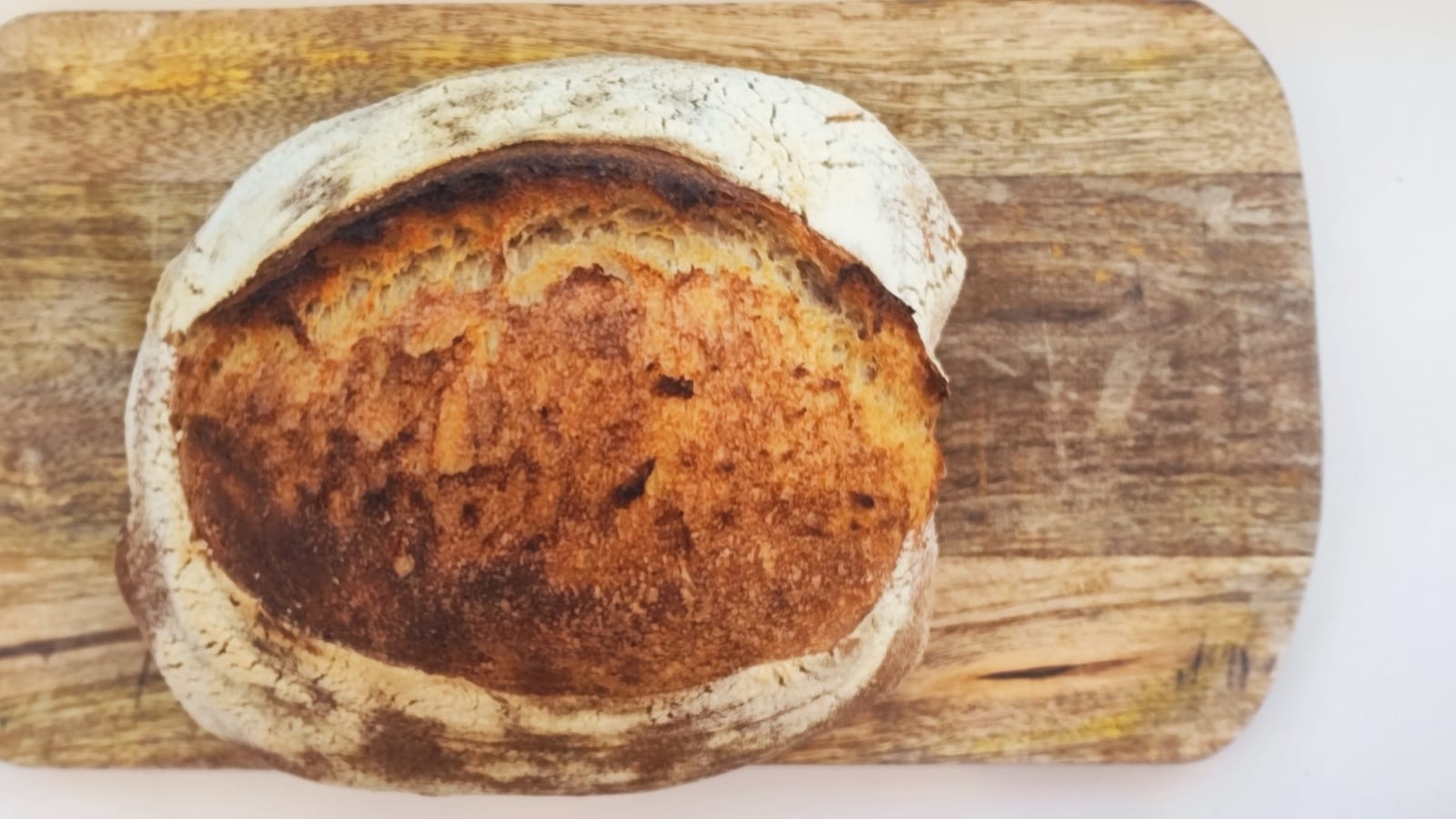
This is why fixed rules like "always double the dough" can cause problems. Doubling can be too much for a warm, highly active dough, especially if you still plan a long final proof.
Under-fermented dough
Under-fermented dough often feels tight, heavy, and resistant. It may tear during shaping, spring back aggressively, and bake into a loaf with a dense lower section or large tunnels surrounded by tight crumb.
Over-fermented dough
Over-fermented dough tends to feel slack, sticky, fragile, and hard to shape. It may spread quickly on the bench and struggle to hold tension. The baked loaf can be flatter, sourer, and less structured.
A practical way to decide
Use the calculator to estimate when to start paying close attention. When you enter that window, check the dough every 20-30 minutes. If the dough has risen, aerated, softened, and jiggles gently, it is usually time to shape.
How I would use this on bake day
As soon as the dough is mixed, take its temperature and enter the recipe into the bulk fermentation calculator. Then leave the dough alone for the early part of bulk except for any folds you planned. Do not start poking it every ten minutes while it is still building strength.
When the estimate says the likely window is getting close, start observing properly. Look at the dough from the side if it is in a clear container. Lift the bowl gently. Feel how the dough responds during a fold or coil. This is the point where the calculator hands over to your judgement.
Container choice helps
A straight-sided tub makes bulk fermentation easier to read because you can see volume change. A round bowl still works, but percentage rise is harder to judge. Marking the starting level with tape or an elastic band can help, especially while you are learning your recipe.
If you bake mostly in the UK with changing room temperatures, this visual reference is worth having. It stops you relying on memory, and it makes each bake a little easier to compare with the last one.