Why your starter rises slowly
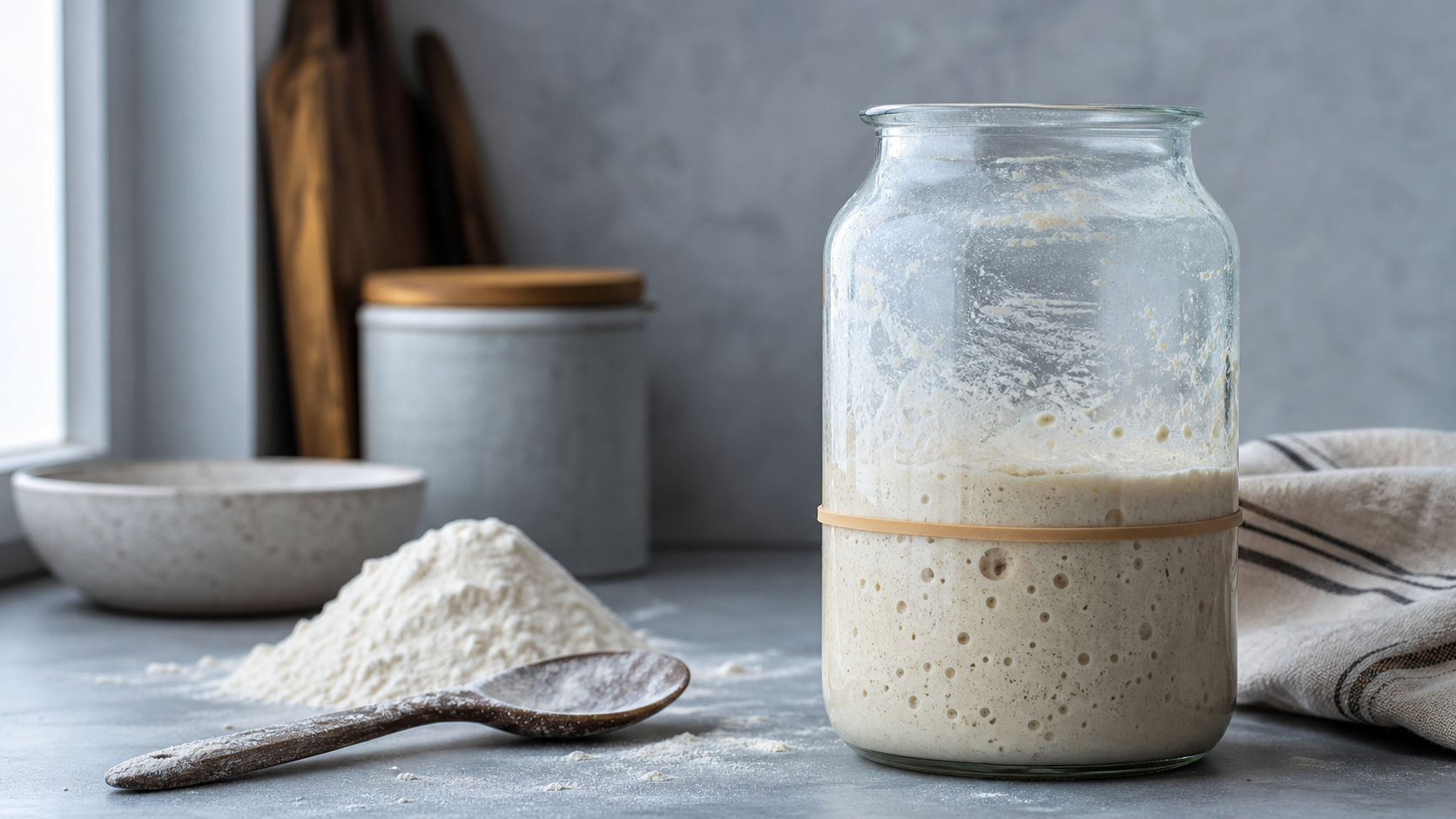
A slow starter is not always a bad starter. Sometimes it is simply cold, underfed, or being asked to perform before it has fully recovered from the fridge.
The room is cooler than you think
Starter activity changes sharply with temperature. A jar that peaks in six hours at 24°C might take far longer at 18°C. In winter, this is the most common reason a reliable starter suddenly seems lazy.
The feed is too large for the timing
If you feed a small amount of starter with a lot of flour and water, it needs more time. That can be useful overnight, but frustrating if you expected it to peak quickly.
The starter was used too soon after refrigeration
A refrigerated starter can need one or two warm feeds before it becomes lively again. It may bubble a little at first without having enough strength to raise dough well.
The flour is not giving it much help
Some white flours are less lively for starter maintenance. A small amount of wholemeal or rye flour can often wake a starter up because those flours bring more minerals and fermentation-friendly nutrients.
What to try
- Keep it somewhere warmer, but not hot.
- Try a smaller feed if you need it ready sooner.
- Add a little wholemeal or rye flour for a few feeds.
- Wait until it has genuinely peaked before judging it.
Do not keep diluting it too early
A common mistake with a slow starter is feeding again and again before it has done anything. That can make the jar weaker because each feed dilutes the active culture before it has had time to multiply. If the starter is cool and sluggish, give it warmth and time before deciding it has failed.
Look for any sign of progress: small bubbles, a slight rise, a softer texture, or a cleaner smell. Once it has moved, feed it again. If it has not moved at all after a sensible warm rest, use a smaller feed and a warmer spot rather than a huge refresh.
A 24-48 hour wake-up plan
For a fridge starter that is not mouldy but seems tired, keep a small amount and give it a modest feed. For example, keep 20g starter and feed 20g water plus 20g mostly organic white flour, with a little wholemeal or rye if you have it. Once it rises, feed again at 1:2:2. Repeat until the jar rises predictably.
Use the starter feed calculator for each refresh. It helps you avoid guessing whether a slow feed is normal for your room temperature or a sign that the starter still needs help.
When the starter is not the problem
Sometimes the starter is fine and the dough is cold. If your starter doubles well after feeding but the bread dough still crawls, check dough temperature after mixing and use the bulk fermentation calculator. A lively starter cannot make an 18°C dough behave like a 25°C dough.
Slow is not always bad. Slow and predictable can make excellent bread. The problem is slow and unknown. Once you know whether the issue is feed ratio, flour, temperature, or timing, the fix becomes much less mysterious.