Cheese and olive sourdough
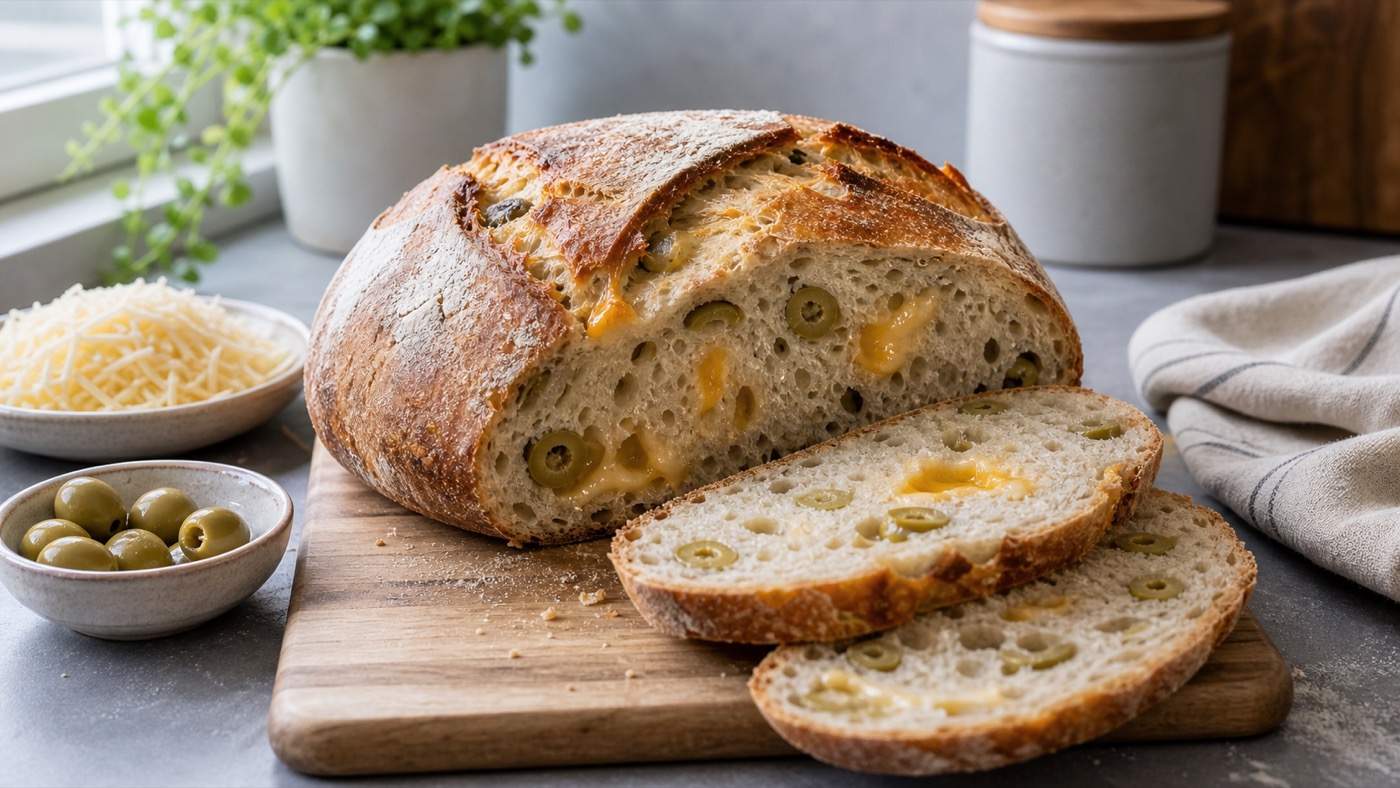
This is the loaf for soup, picky lunches, cheese boards, and the dangerous moment where you cut one slice just to check it has cooled. Mature cheddar gives savoury pockets through the crumb, while olives bring salt, moisture, and a bit of sharpness.
Because both cheese and olives are salty, the base dough uses a little less salt than usual. Drain the olives properly, keep the cheese in small pieces, and add everything after the dough has some strength.
Ingredients
- 500g strong white flour
- 320g water
- 100g active sourdough starter
- 8g fine sea salt
- 120g mature cheddar, cut into small cubes or coarsely grated
- 90g pitted green or black olives, drained, patted dry, and roughly chopped
- Optional: black pepper, rosemary, or a little lemon zest
Before you mix
Feed your starter so it is active when the dough is mixed. The starter calculator helps with the final build, especially if your kitchen is cool. Once mixed, use the bulk fermentation calculator for timing, but remember that salty inclusions can make the dough feel a little slower.
Cheese choice
Small cubes give obvious melted pockets. Grated cheese disappears more into the crumb and gives a softer overall flavour. Both work. Very wet cheeses are harder to manage and can make the loaf gummy, so save those for later experiments.
Method
Mix the flour and water until no dry flour remains. Rest for 20-30 minutes. Add the starter and salt, then mix until fully combined. Take the dough temperature after mixing and put the recipe into the bulk calculator.
Give the dough one fold before adding the inclusions. On the second fold, gently stretch the dough out and scatter over half the cheese and olives. Fold the dough over itself, scatter over the rest, then fold again. If pieces fall out, press them back in rather than chasing perfection.
Continue bulk fermentation with gentle coil folds. Heavy inclusions can interrupt gluten, so do not keep wrenching the dough around once it is holding together.
Shape and proof
Shape firmly but not violently. Any cheese near the surface may leak during baking, which is not a failure; it is basically a built-in snack. Use baking parchment if you are worried about melted cheese sticking to the pot or tin.
Proof at room temperature or refrigerate overnight. The cold proof makes the loaf easier to score and gives the savoury flavours more time to settle.
Bake
Heat the oven to 240°C with your covered baking setup inside. A casserole pot is ideal, but two loaf tins are very useful if you want to bake more than one loaf at once: dough in one tin, second tin inverted over the top for steam.
Bake covered for 20 minutes, then uncover, reduce to 220°C, and bake for 20-25 minutes more. Let the loaf cool for at least an hour so the cheese pockets set properly.
Notes
If your olives are very briny, rinse and dry them before adding. If using strongly salted olives and salty cheese, keep the dough salt at 8g rather than pushing it back to the usual 10g.