Lemon and icing sugar sourdough
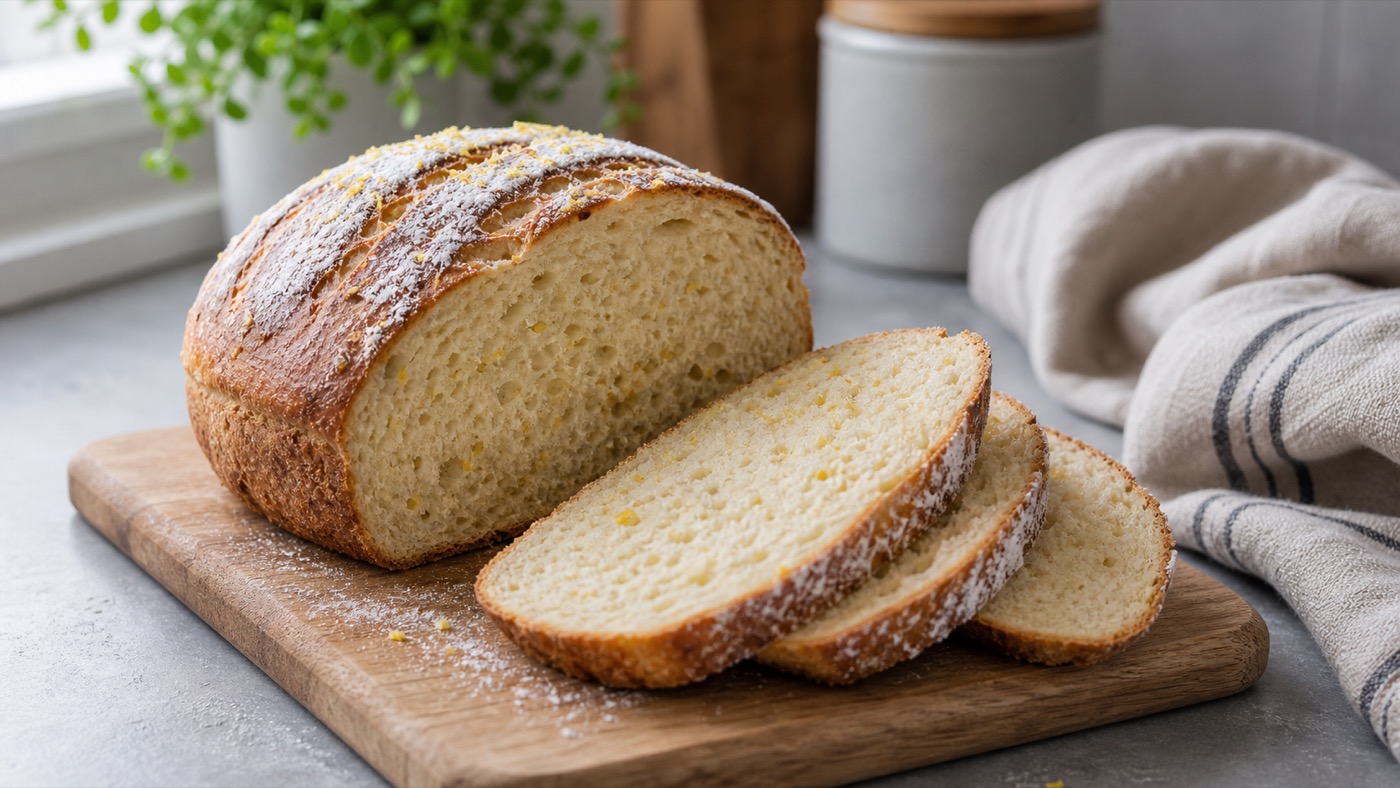
This is a gentle sweet sourdough rather than a cake pretending to be bread. The lemon comes from zest, not juice, so the dough stays strong and bright without turning sharp. The icing sugar gives a soft sweetness and a lovely finish once the loaf has cooled.
The important thing is restraint. Too much sugar changes fermentation and browning, and too much lemon juice can tighten the dough. Keep it simple: good strong white flour, active starter, lemon zest, and a light dusting of icing sugar at the end.
Ingredients
- 500g strong white flour
- 315g water, plus 10g only if the dough feels tight
- 100g active sourdough starter
- 9g fine sea salt
- 35g icing sugar for the dough
- Finely grated zest of 2 unwaxed lemons
- Extra icing sugar for dusting after baking
Before you mix
Feed your starter so it is lively and close to peak when you make the dough. If you are trying to hit a particular mixing time, use the starter feeding calculator to build the amount you need without guessing.
This dough browns faster than a plain white loaf because of the icing sugar. It also smells ready before it is ready, which is rude but true. Use the bulk fermentation calculator for the timing window, then judge the dough by rise, bubbles, softness, and movement.
Method
Mix the flour, water, and icing sugar until no dry flour remains. Rest for 20-30 minutes. Add the starter and salt, then mix until the dough feels even. Take the dough temperature after mixing and enter the recipe into the bulk calculator.
Give the dough one fold after about 30 minutes. On the second fold, scatter over the lemon zest and fold gently until it is tucked through the dough. You are not trying to knead the zest in aggressively; you are trying to spread it without tearing the gluten you have just built.
Continue with 2 more folds during the first half of bulk fermentation. Then leave the dough alone until it is aerated and relaxed. A sweetened dough can feel a little stickier, so use wet hands rather than adding extra flour.
Shape and proof
Shape as a boule or batard and place seam-side up in a floured banneton or lined bowl. Proof at room temperature if you want a same-day loaf, or refrigerate overnight for easier scoring and a cleaner lemon flavour.
Bake
Heat the oven to 230°C with your covered baking setup inside. A cast iron casserole pot works well. Two loaf tins also work brilliantly: dough in one tin, the second tin inverted over the top for the covered part of the bake.
Bake covered for 20 minutes, then uncover, reduce to 205-210°C, and bake for another 20-25 minutes. Watch the colour. Because there is sugar in the dough, it may finish darker than a plain loaf at the same temperature.
Finish
Cool fully before slicing. Dust lightly with icing sugar once the loaf is cold, not warm, or it will disappear into the crust. This is lovely toasted with butter, cream cheese, lemon curd, or just eaten plain while pretending you are only having one slice.
Notes
Avoid adding lemon juice to the dough unless you are deliberately experimenting. Zest gives the flavour without adding extra acid and water. If you want it sweeter, add sweetness after baking with a light icing sugar dusting rather than loading the dough with more sugar.