Room temperature and sourdough timing
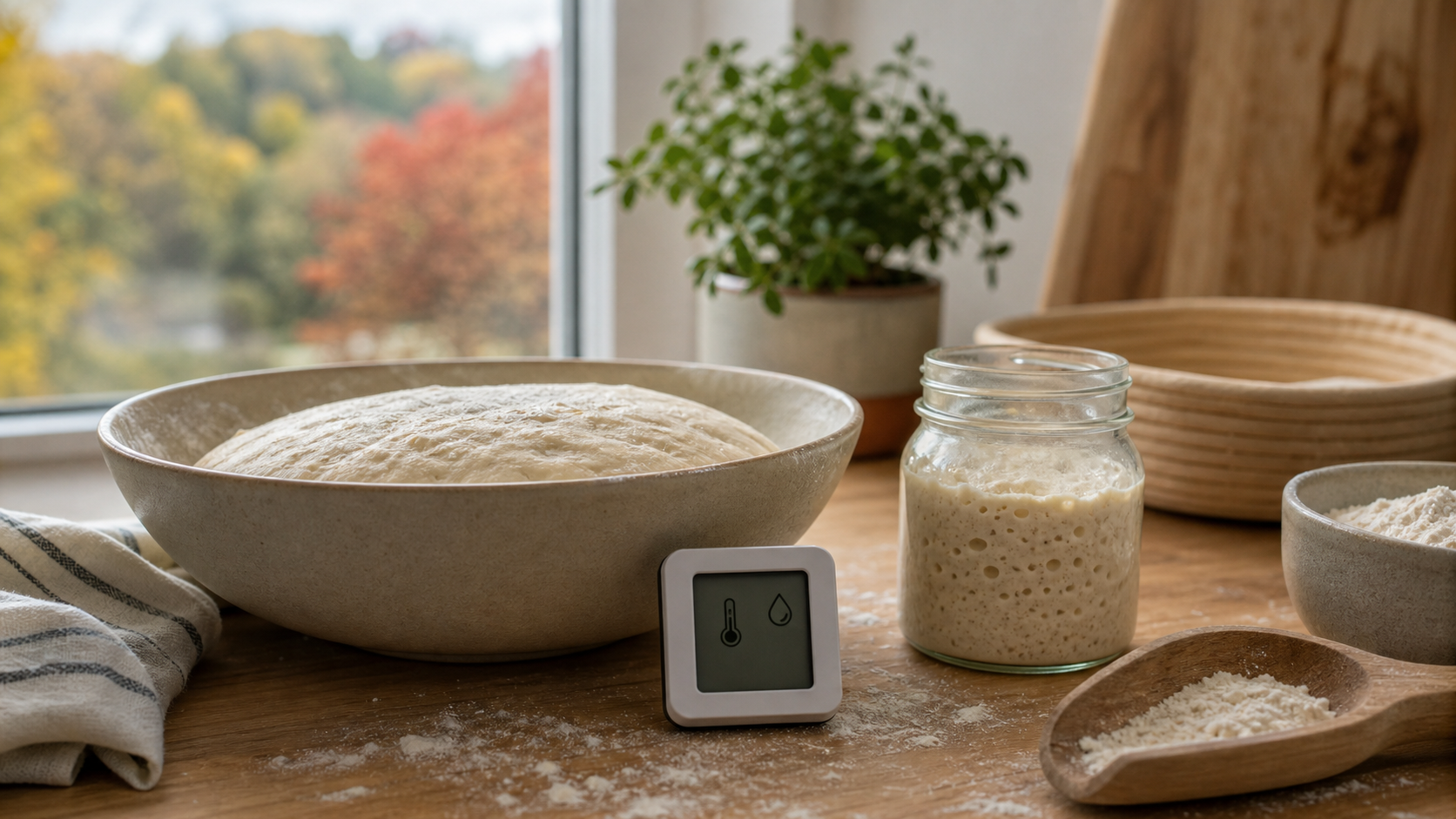
Room temperature changes almost everything in sourdough. It affects starter feeds, bulk fermentation, final proof, and how quickly the dough moves once shaped.
Why recipes rarely match your kitchen
A recipe written in a 24°C kitchen will not behave the same way in an 18°C kitchen. The ingredients may be identical, but fermentation speed will not be.
Starter feeds
Warm rooms make starter peak faster. Cool rooms slow it down. If you need your starter ready at a specific time, use the starter feed calculator instead of relying on a fixed schedule.
Bulk fermentation
Room temperature matters during bulk, but internal dough temperature is even better. Use both pieces of information when estimating timing with the bulk fermentation calculator.

Practical control
You can change water temperature, starter amount, location, or time. Once you understand the room, sourdough becomes easier to plan.
A British kitchen is rarely one temperature
One of the most useful lessons from UK home bakers is that "room temperature" is not a stable thing. A kitchen in Surrey, Yorkshire, Glasgow, or Cornwall can be 17°C in the morning, 20°C after cooking dinner, and cooler again by bedtime. If the dough is sitting by a cold window or on a stone worktop, it can be several degrees cooler than the thermostat suggests.
This is why recipe times can feel so unreliable. A sourdough recipe may say four to five hours for bulk fermentation, but that assumes a certain dough temperature, starter strength, flour mix, salt level, and hydration. Change the room and the clock changes with it.
For a more specific look at cooler homes, radiators, draughts, and 16-19°C rooms, read sourdough in a cool Northern kitchen.
Use the room as context, not the whole answer
When using the bulk fermentation calculator, enter the dough temperature first. Then add room temperature if you know it. The room value is there to refine the estimate, especially when the dough will spend several hours sitting in a cool or warm place.
For the starter feed calculator, room temperature matters because the jar is small and responds quickly. A starter on a warm shelf can peak hours before the same feed left beside a cold sink.
How to adjust without changing the whole recipe
If your room is cool, start with warmer mixing water, keep the dough away from draughts, or allow more time. If your room is warm, use cooler water, reduce starter slightly, or watch the dough earlier than expected. These are small adjustments, but they are the difference between a relaxed bake and dough that either sits still all day or runs away from you.
In practice, I treat room temperature as a warning light. If the kitchen is 18°C, I know not to trust a summer timetable. If it is 25°C, I know the dough may look sleepy and then suddenly move quickly. The calculator gives the timing window, but the dough still gets the final vote.