How to add inclusions to sourdough without wrecking the loaf
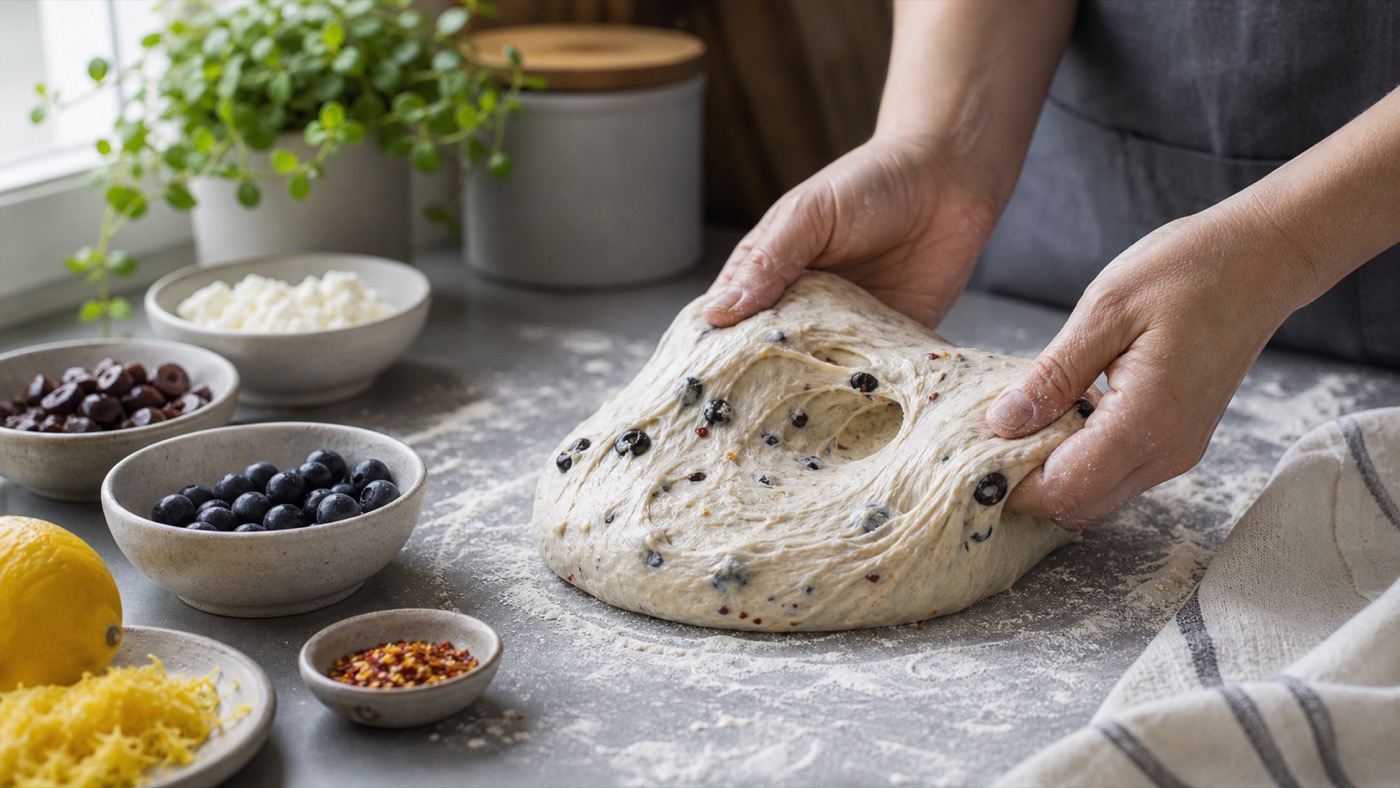
Inclusions are where sourdough gets fun. Lemon zest, blueberries, chilli, olives, cheese, seeds, nuts, herbs, dried fruit: they can turn a plain loaf into something worth planning lunch around. They can also make dough sticky, tear the gluten, slow fermentation, leak into the pot, or leave you wondering why your beautiful loaf now looks like it lost a fight with a fruit salad.
The fix is not complicated. Build the dough first, add inclusions once it has some strength, and adjust the water, salt, and handling depending on what you are adding.
What inclusions change
Every inclusion does something to the dough. Wet fruit adds water. Dried fruit steals water unless it is soaked. Olives and cheese add salt. Sugar makes the crust brown faster. Seeds and nuts can cut through gluten if they are sharp or added too heavily. Herbs and zest are easy, but even those spread better when folded in gently rather than mashed through the dough at the start.
This is why a calculator helps with timing but cannot magically know that you have added a handful of wet berries or salty olives. Use the bulk fermentation calculator for the base dough, then watch the dough itself: rise, bubbles, softness, wobble, and strength.
When to add inclusions
For most home loaves, add inclusions after the dough has had one fold. That first fold gives the dough structure. Then the second fold becomes your inclusion fold.
Dry, fine ingredients such as herbs, spices, lemon zest, or chilli flakes can go in earlier if you want, but I still prefer adding them during a fold because they distribute more evenly. Wet or fragile ingredients, such as blueberries, olives, roasted peppers, or cheese, should go in later so they do not get crushed during the main mix.
The folding method
Lightly wet the worktop or your hands. Ease the dough out into a rough rectangle without forcing it paper-thin. Scatter over half the inclusions. Fold one side over the middle, then the other side over that. Scatter over the rest, then fold from top to bottom. Put the dough back in the bowl or tub seam-side down.
For heavy inclusions, add them in two passes rather than dumping everything in the centre. You want layers, not a single buried pile. If bits fall out, tuck them back in calmly. The dough does not need to look perfect at this point.
Wet inclusions
Blueberries, olives, roasted vegetables, and anything from a jar can all bring extra water. Dry them well before adding. Hold back 10-20g water from the main dough if you know the inclusion is juicy. You can always add a splash later, but it is hard to rescue a dough that has quietly become soup.
For blueberry and chilli sourdough, use firm fresh blueberries if possible. Frozen berries can work, but add them from frozen and expect purple streaks. For olives, drain, rinse if very salty, and pat dry.
Salty, sweet, and fatty inclusions
Cheese and olives are already salty, so reduce the salt in the dough a little. A normal 500g flour loaf might use 10g salt; for cheese and olive sourdough, 8g is often enough.
Sugar and sweet inclusions increase browning. Lemon and icing sugar sourdough should usually bake a touch cooler once uncovered, because the crust colours faster than plain bread. Fatty inclusions such as cheese can also leak, so bake on parchment if you want easier cleaning.
How much is too much?
As a starting point, keep inclusions around 20-40% of the flour weight. For 500g flour, that means roughly 100-200g total inclusions. Light ingredients such as zest or chilli flakes are obviously much lower. Heavy inclusions make shaping harder and can compress the crumb if you push too far.
Recipes to try
Start with one of these and keep notes. The flavour part is personal, but the handling lessons carry across almost every inclusion loaf.
- Lemon and icing sugar sourdough for a bright, lightly sweet loaf.
- Blueberry and chilli sourdough if you want fruit, heat, and a bit of drama.
- Cheese and olive sourdough for a savoury loaf that barely needs anything on it.
Calculator workflow
Use the starter calculator to build an active starter for your mix time. Mix the dough, take the dough temperature, then use the bulk fermentation calculator as your timing guide. Add the inclusions during the folds, and let the dough, not the clock, make the final decision.